Spain produces wine from sea level to sky, but few regions taste quite as unusual as Granada. The Contraviesa-Alpujarra subzone sits between 900 and 1,400 metres above sea level along the south-facing slopes of the Sierra Nevada — making it one of the highest wine-producing areas in Europe. The altitude keeps nights cold even in summer, slowing fermentation and pulling more acid and aromatics into the grape. The result is white wines that land somewhere between a crisp Galician Albariño and a mountain Riesling, and reds with more structure than you expect from Andalusia.
The Granada DO, established in 2009, is still relatively unknown outside Spain. That obscurity is part of the appeal. Tour groups filling the Alhambra queues have not arrived here yet.
What a full-day tour looks like
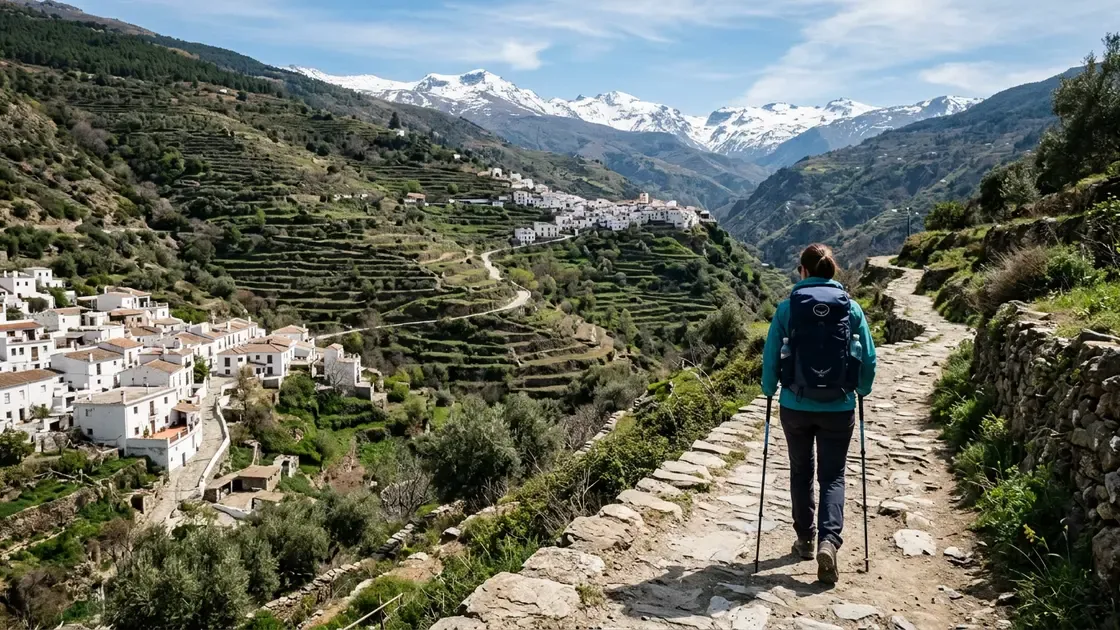
Most organised tours pick up from Granada city centre in the morning and spend seven to eight hours in the Alpujarras. The drive takes about 90 minutes, first east through the irrigated plain, then climbing into the Sierra Nevada foothills past terraced farms and white villages. By the time you reach the first bodega, the temperature is already a few degrees cooler than the city.
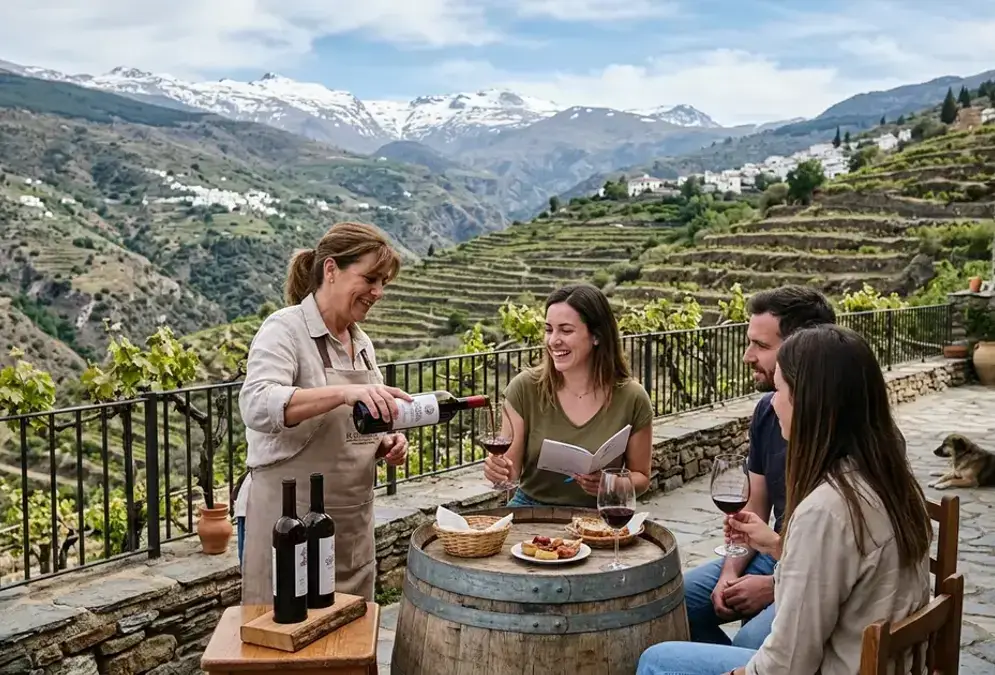
A typical itinerary visits two or three family bodegas. At each one, a winemaker or the owner walks you through the vineyard to explain the vine training methods (mostly bush vines and the old parral system, where vines spread horizontally on low frames to protect grapes from the sun), then through the cellar. Tasting usually runs four to six wines with tapas: local charcuterie, cheeses from the nearby Lecrín Valley, and sometimes a small plate of broad beans dressed in olive oil.
Bodega Cuatro Vientos in Murtas and Bodega Dominio Buenavista in Ugíjar are among the most visited, though operators rotate according to availability and season. The Centro Temático del Vino Alpujarride in Tórvizcon, at 1,352 metres, adds an educational dimension if you want the full regional context before tasting.
The wines themselves
Granada DO authorises around 20 grape varieties, a mix of international cultivars and local ones. The local varieties are what to seek out. Vigiriega is a white grape almost extinct elsewhere, producing wines with good acid and an unusual fennel-and-citrus profile. Torrontés Granadino (unrelated to the Argentine Torrontés) gives aromatic whites with more weight. Among reds, look for Romé — rarely found outside the Contraviesa — and the blends built around Tempranillo and Garnacha that dominate production.
Altitude forces the vines to work harder and ripens them more slowly than in Jerez or Málaga. The growing season stretches into October, sometimes November. This is why the harvest tour in September and October has a different character: you can watch grape-picking on the terraces while tasting the just-finished previous vintage.
Practical information
Organised full-day tours run from around €40 to €50 per person, including transport, bodega visits, and tapas pairings. Operators available on GetYourGuide and Viator cover pick-up from central Granada hotels. Book one to two days ahead for weekdays; for September and October harvest season, book further in advance.
If you prefer to drive independently, the Alpujarras road (A-348) from Lanjarón is well-marked and the bodegas accept walk-in visits on most weekdays, though calling ahead is wise. Build in the return drive sober — the mountain roads require full attention and the passes above 1,200 metres get fog in the afternoon during autumn.
The tour pairs well with a broader food exploration of the province: the olive oils from the Lecrín Valley, the jamón serrano from Trevélez, and the cheeses made in the villages along the route all appear on tasting tables at better bodegas.
Best time to go
April through October covers the main operating window. Spring brings almond and cherry blossoms across the terraces — the vines are not yet leafed out, which makes the underlying landscape visible in a way it is not in summer. September and October are harvest months: noisier, more activity, and the cellar smells of fermenting juice. Winter visits are possible but require confirming that the bodega you want to see has not closed for the season; some small producers shut from December through February.