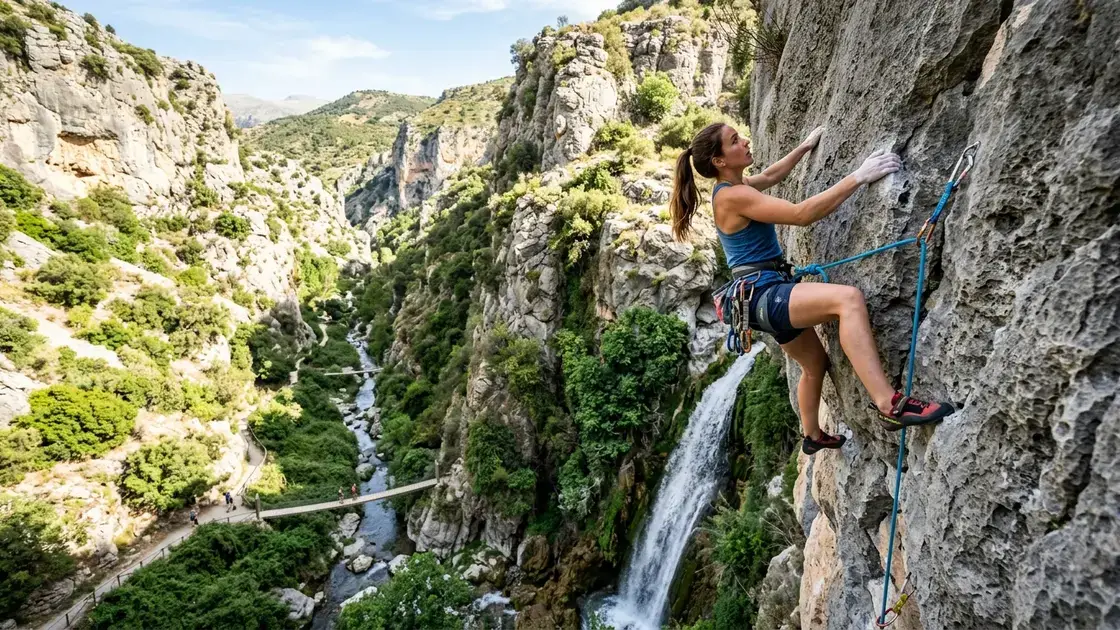
Fifteen minutes south of Granada city centre, the Monachil valley cuts through the Sierra Nevada foothills and drops into Los Cahorros canyon. The rock is compact limestone, grey-white and featured: crimps, pockets, short overhangs, the occasional slab that requires footwork more than strength. There are over 350 single-pitch sport routes across the canyon's main sectors, ranging from approachable 5a lines to serious 8c projects. For a city site, it is an extraordinary amount of climbing within easy reach.
The sectors
The main climbing areas sit within the Monachil valley and the Los Cahorros gorge. Los Tacos is the busiest sector: well-bolted routes in the 6a–7a range, quick to reach from the parking area, and largely south-facing so it catches morning sun. El Faraón has steeper lines and a higher proportion of harder routes, mostly 7a and above, with technical crimpfests on the vertical walls. Cleopatra offers a mix of grades and a slightly longer walk in. La Araña sits further into the gorge, cooler and shadier, worth the extra ten minutes on days when Los Tacos bakes in afternoon heat. The alternative area Los Vados is quieter and better suited to climbers working in the lower grades who want to avoid the crowds on busy weekends.
The grading system: read this before you climb
The local grading at Los Cahorros is consistently sandbagged relative to French sport grades. A route marked 6c+ here climbs more like a French 7a. The gap runs roughly one to two grades across the crag, and it catches visiting climbers, particularly those used to well-equipped French limestone where grades are generous in the other direction. Start one to two grades below your usual warm-up level on your first session at Los Cahorros. The rock rewards a methodical approach: the holds are small and the sequences are specific, so reading the route before committing pays off more than at crags where you can muscle through on steep holds.
Guided climbing
Explore-Share runs half-day guided sessions at Los Cahorros, priced around €80–100 per person depending on group size. The guide handles transport, provides equipment if needed, and selects routes appropriate to the group's level. Useful for visiting climbers unfamiliar with the local sectors and the sandbagged grades. Sierra Nevada Guides (sierranevadaguides.co.uk) also operates rock climbing days in the valley, with sessions available for beginners through to experienced sport climbers looking to push their grades on the harder lines.
For independent climbers, access is straightforward: drive south from Granada on the A-395 toward Sierra Nevada, turn off for Monachil village, and follow the track to the canyon entrance. Parking is at the canyon mouth; walk-in times to the sectors range from five to fifteen minutes. The approach path is well-worn. A route database for Los Cahorros is maintained on thecrag.com, with topos for all main sectors.
When to go
The best climbing window is September through May. October, November, March, and April are the prime months: mild temperatures, stable conditions, and the south-facing sectors dry fast after rain. In summer, the canyon heats up quickly. July and August are not impossible: arrive before 09:00 and you can get two or three hours on the shadier sectors before the heat becomes a factor. By 11:00 in July the rock temperature makes climbing uncomfortable on anything south-facing. The skiing season at Sierra Nevada and the rock climbing season here overlap in spring: you can genuinely do both in the same trip to Granada in late March.
Practical information
Water is essential regardless of season. The canyon is exposed and there is no shade on most sectors during midday. Bring at least two litres per person. There are no facilities at the cliff base; the nearest café is back in Monachil village. A single 60m rope covers the vast majority of routes; most lines are 20–35 metres. Quickdraws are needed for everything; this is a pure sport crag with no trad gear required.
For non-climbing partners, the Los Cahorros walk through the gorge (narrow suspension bridges, waterfall pools) is a full half-day on its own, and the Sierra Nevada day trip offers context for the broader mountain environment surrounding the crag.