
In 1922, a composer and a poet stood together in the Carmen de los Mártires neighbourhood and decided to rescue flamenco from its commercial debasement. Manuel de Falla, already famous for El amor brujo and The Three-Cornered Hat, had moved to Granada the previous year. Federico García Lorca, 24 and still unpublished, had grown up just down the road. The Cante Jondo competition they organised that June in the Plaza de los Aljibes was attended by Manuel de Falla, Igor Stravinsky, and several thousand Granadinos — and is still credited with saving a musical form that was dying on café stages.
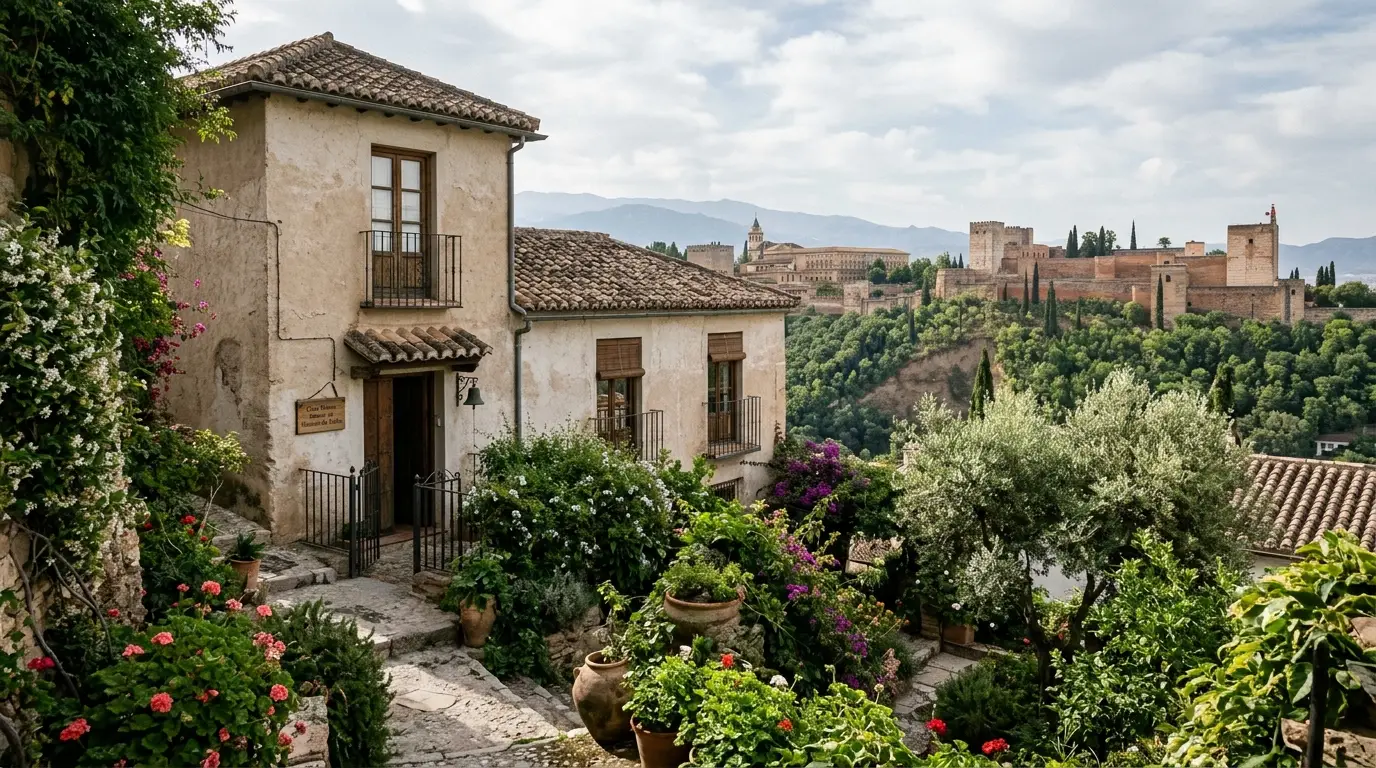
This white-walled carmen on the Paseo de los Mártires is where Falla lived and worked from 1921 until 1939. It is small, plain, and largely unchanged. The upright piano he used to compose El Retablo de Maese Pedro (completed here in 1923) sits in the sala just inside the entrance. His writing desk still holds a pen and some papers arranged as he left them. On the walls there are sketches from Pablo Picasso and a drawing from Ignacio Zuloaga. The Archive on the upper floor holds his original manuscripts and correspondence — the physical paper on which Atlántida was painstakingly assembled across two decades, though Falla never finished it.
The friendship with Lorca
Falla was 45 when he arrived in Granada; Lorca was barely out of school. They collaborated on puppet theatre shows performed in the garden here, wrote letters that fill several volumes, and spent evenings at each other's houses in a neighborhood that in the 1920s was a remarkably productive corner of European culture. Falla left for Argentina in September 1939, days after the civil war ended. He never came back. Lorca had been shot in a field outside Granada three years earlier. The house has a particular melancholy because of this: Falla intended to return, and he is buried in Cádiz.
The garden and the views
The garden at the back of the house is worth the visit on its own terms. From here you can see across the Vega plain toward the Sierra Elvira and, on a clear morning before the haze builds, the full ridge of the Sierra Nevada. The same view Falla looked at every morning for eighteen years. It is one of the better viewpoints in Granada that most visitors never find.
Practical information
The museum reopened in early 2026 after conservation work; check current hours before going. Guided tours only, running approximately 40 minutes, are available in Spanish, English, and French. Admission is €3, with a reduced rate of €1 for students and seniors, and free entry on Wednesdays before 11:00. The museum is in the Realejo district, about 15 minutes on foot from the cathedral through the old Jewish quarter of the city.