Carmen de los Mártires — Romantic Gardens on the Alhambra Hill
garden romantic free

Carmen de los Mártires — Romantic Gardens on the Alhambra Hill

Seven-hectare Romantic estate on the Alhambra hill with free entry, roaming peacocks, five garden styles, and a Poets Route with verses by García Lorca.

Winter (Oct 16–Mar 31): Mon–Fri 10:00–14:00 & 16:00–18:00; Sat–Sun 10:00–18:00. Summer (Apr 1–Oct 15): Mon–Fri 10:00–14:00 & 18:00–20:00; Sat–Sun 10:00–14:00 & 17:00–20:00.
Free entry
Itineraire
Back to Realejo / Jewish Quarter

A hundred metres from the Alhambra ticket queue, behind an iron gate that most visitors walk straight past, seven hectares of gardens sit empty. Carmen de los Mártires costs nothing to enter and asks for nothing in return. The difference in atmosphere between the two sides of that gate is not subtle.

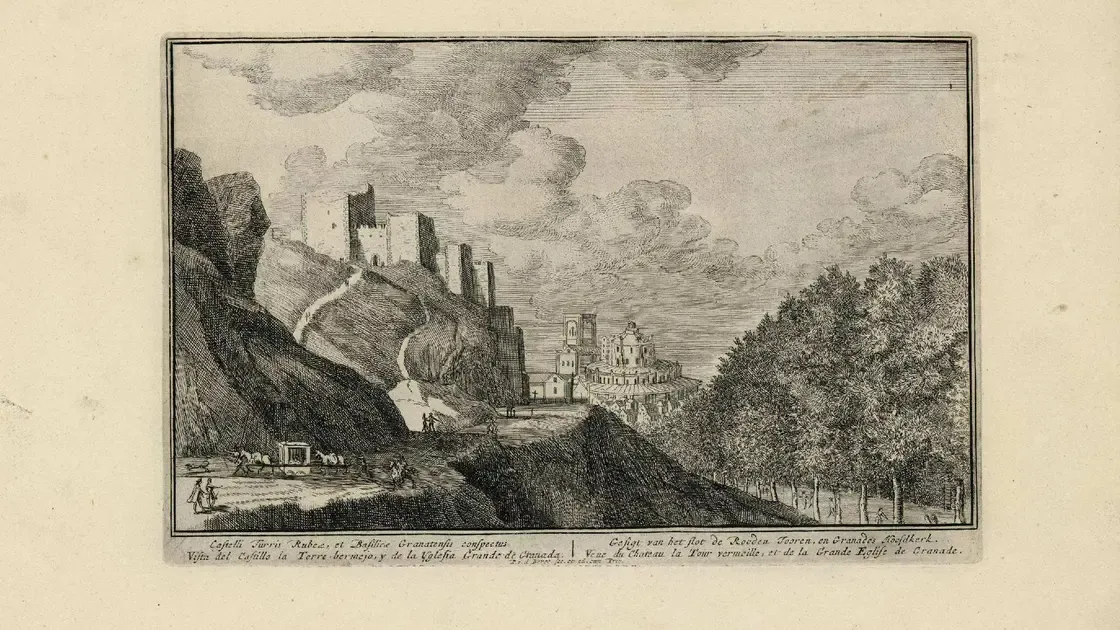
The site has three distinct pasts. During the Nasrid period, this slope of the Alhambra hill held Christian captives taken in the wars before the Reconquista — the name, the Martyrs, is their inheritance. After 1492, a Carmelite convent rose on the land; San Juan de la Cruz, the 16th-century mystic poet, lived here as prior and wrote some of his most searching verse in a cell that looked out over Granada. The convent is gone now, its ruins absorbed into the 19th-century Romantic estate that a series of titled owners built across the hillside: formal French parterres in one corner, an English-style landscape garden in another, a Nasrid-inspired water channel, an Andalusian courtyard, a lake where ducks congregate in the shallow end.

Peacocks have lived here as long as anyone can remember. They walk the gravel paths without interest in being photographed, stand on the balustrades in the morning sun, and occasionally spread their tails for reasons of their own. The Poets Route runs through the grounds with stone tablets carrying lines from Federico García Lorca and San Juan de la Cruz — two poets bound to Granada who wrote about longing and the particular quality of Andalusian light. The old San Juan cedar still stands in the garden, a living piece of that earlier history. For the full visit guide including seasonal hours and the best walking approach from the Alhambra, see our Carmen de los Mártires planning guide.

The 19th-century villa at the centre of the estate is not open to the public — only the gardens. That is enough. An hour here, on a Tuesday morning in April when the orange blossom is out and the peacocks are in the formal garden, and you may wonder why anyone queues for an hour at the ticket office below.
Practical information

Opening hours

Winter (Oct 16–Mar 31): Mon–Fri 10:00–14:00 & 16:00–18:00; Sat–Sun 10:00–18:00. Summer (Apr 1–Oct 15): Mon–Fri 10:00–14:00 & 18:00–20:00; Sat–Sun 10:00–14:00 & 17:00–20:00.

Admission

Free entry

Address

Paseo de los Mártires s/n, 18009 Granada

View on Google Maps

Tags

garden romantic free alhambra hill 19th century

Frequently asked questions

Is Carmen de los Mártires free?

Yes. Entry to the gardens is free, with no ticket required and no booking system. The gardens are managed by the city of Granada, which keeps them open to the public at no charge. The 19th-century villa inside the estate is not open to visitors — but the gardens, including all five garden sections, the lake, and the Poets Route, are fully accessible during opening hours.

How do I get there from the Alhambra ticket office?

Walk uphill past the main Alhambra ticket office, continue along the road towards the Hotel Alhambra Palace, and follow Paseo de los Mártires. The garden entrance is an iron gate on your left, about 5 minutes on foot from the ticket office. There is no signage pointing to it from the Alhambra complex — easy to miss. The Alhambra minibus (line C30 or C32 from Isabel la Católica) stops nearby.

Are the peacocks always present?

In practice, yes. The peacocks live in the garden year-round and roam freely through all sections. They tend to be most active in the morning, moving between the formal parterre, the balustrades, and the lake. If you visit in spring (March to May), the males are in full plumage and more likely to display. They are habituated to people and will often stay still for photographs at close range.

Further reading

Sources