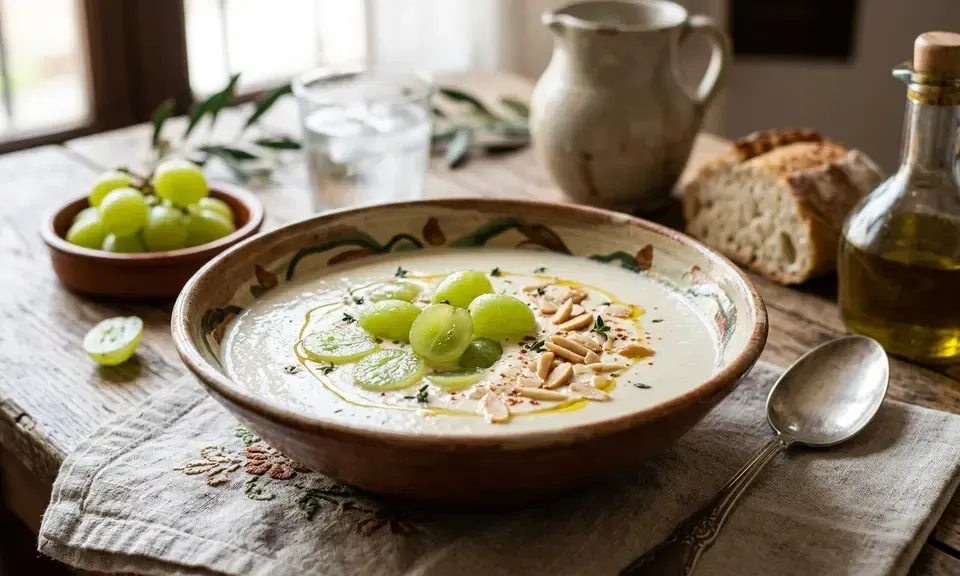
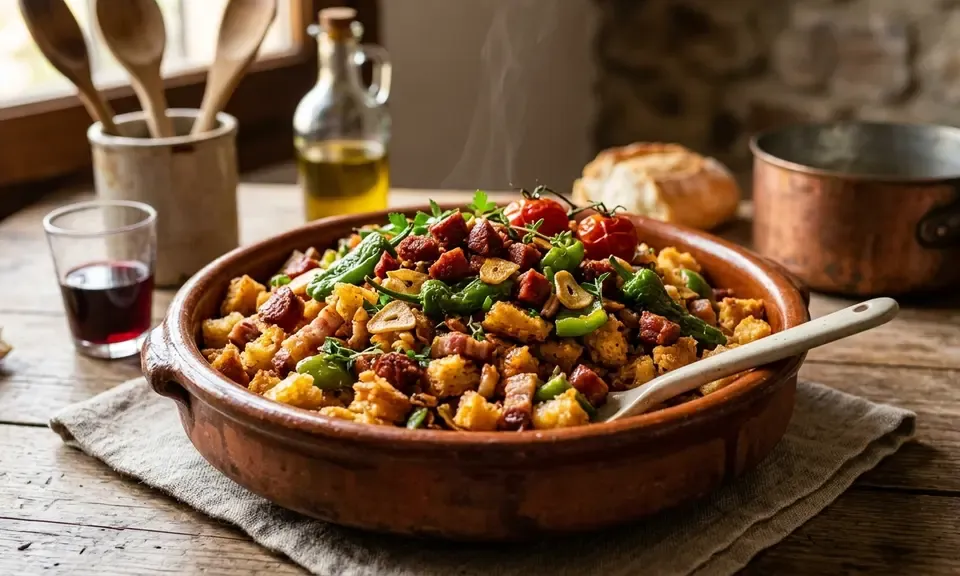
The tostón is bread fried in olive oil. That's the whole recipe. Day-old country loaf — the kind that has gone slightly stale overnight — cut into thick slices or chunks, dropped into hot olive oil, and fried until the exterior turns deep gold and the interior stays soft. Salt goes on immediately after, while the oil is still on the surface.
It sounds too simple to be worth seeking out. It isn't. The texture contrast between a proper tostón and a slice of toast is significant: the fried bread develops a crunch that toast cannot replicate, and the olive oil absorbed during frying gives the interior a richness that dry heat cannot produce. The quality of the oil matters — good frying olive oil from the Granada province produces something better than the industrially fried version.
Working-class roots
The tostón traces to the practicalities of the pre-refrigeration kitchen. Bread goes stale quickly in Andalusia's dry heat. Rather than waste it, cooks fried old bread to give it a second life — a practice common across southern Spain under various names (migas, torrijas, the Extremaduran version soaked in milk). The Granada tostón is the simplest version: nothing added, nothing soaked, just bread and oil.
For the agricultural workers in the Vega plain and the mountain villages around Granada, tostón was a breakfast. Strong olive oil, coarse salt, maybe a few olives or a slice of cured meat alongside. Cheap, calorie-dense, quick to prepare. It still appears as a breakfast item in the early-opening bars near markets and in the working-class neighbourhoods away from the tourist centre.
How it appears in Granada's bar culture
As a free tapa, tostón shows up at traditional neighbourhood bars — the kind of bar that opens at 7am for the market workers and runs until midnight for the evening crowd. Arriving as a tapa in the early evening, it costs the bar almost nothing to produce, which is why it signals the less impressive end of the free tapa spectrum. A bar sending tostón as its rotation tapa is a bar that is not trying very hard. The dish is not the problem; the context is.
Where tostón is worth ordering deliberately: at a traditional Granada breakfast bar, early morning, with a café solo. The coffee is intensely dark and the fried bread cuts through it in a way that croissants and pastries don't. Some bars add a slice of jamón on top; others offer alioli. The plain version is the correct starting point.
Price in traditional bars: €0.50 to €1 per serving. The cheapest tapa in the city.