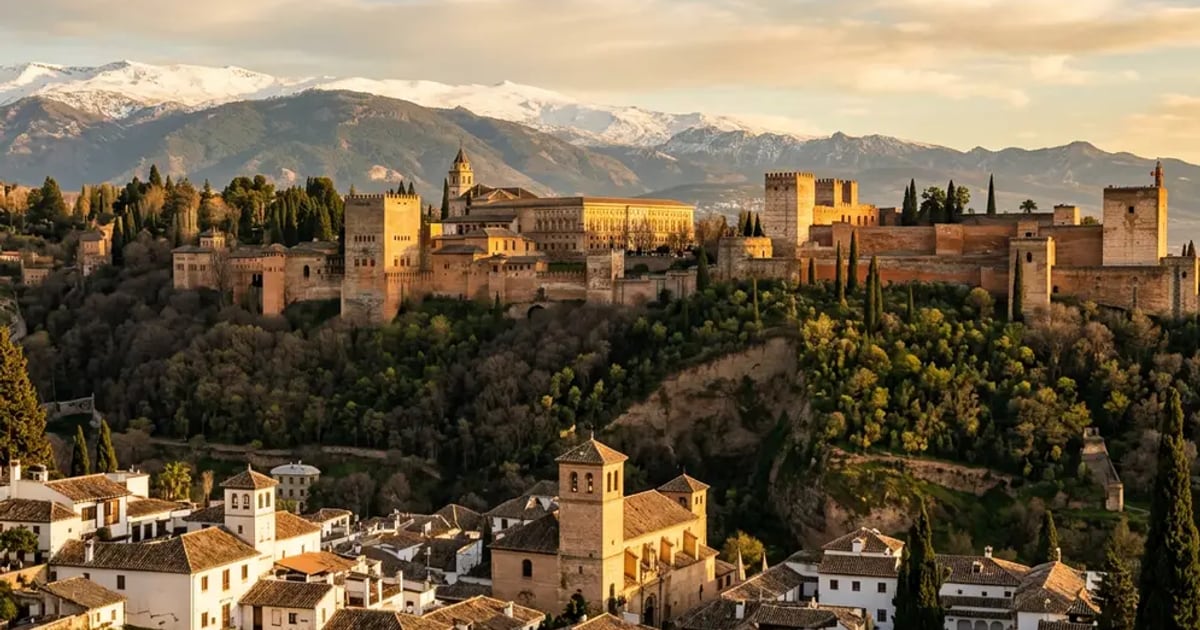
The Alhambra at first light. Sacromonte caves in afternoon shadow. Albaicín lanes at 7am before the tourists arrive. Granada has the settings — a workshop helps you use them.
Seven years resident in Granada. Specialist in Nasrid architecture, Al-Andalus history, and Andalusian walking routes.
Published
Granada is one of the most photographed cities in Spain, and the best spots are well documented. What a photography workshop adds is not the location — it is the knowledge of when to be there, how to read the light, and how to make photographs that look different from the 40 other people standing at the same viewpoint. If you want a list of where to go, that guide covers it. This one is about organised workshops, guided learning experiences, and structured sessions with professional photographers who work these streets every week.
Granada suits both amateur photographers who want to improve and travel content creators who need specific output from limited time in the city. The options range from a three-day immersive workshop (Eight Peaks Photography, led by street photographer Jerry Webb and Granada specialist Chris Wright) to a single-morning Albaicín walk with Escuela Montalbán, to a private golden hour session booked through a local photographer for €80–150 per hour.
Photography workshops: at a glance
Multi-day workshops
3-day immersive
Walking sessions
3–4 hours
Golden hour tours
€50–150
Portrait sessions
€80–150/hr
Best light
6–8am, 7–9pm
Book ahead
Alhambra 2–3 months
Workshops vs self-guided photography
The practical argument for a workshop over going alone: Granada's best light windows are short, the city is confusing to navigate at 6:30am on your first morning, and the Alhambra's photography rules (no tripods, specific time slots, no flash in the Nasrid Palaces) take time to understand. A guided session eliminates the logistical overhead and puts you in position before the light changes.
The argument for going alone: you move at your own pace, you can return to the same spot repeatedly, and some of the most interesting Granada photography happens in the early-evening tapas bars and side streets where a workshop group of six people attracts more attention than a solo photographer does.
A practical hybrid: book one structured session for your first morning in the city (an Albaicín walk or golden hour tour) to get oriented and understand the light, then spend the remaining time working independently based on what you learned. That combination costs €50–80 and replaces 2–3 days of trial-and-error solo work.
When a workshop is worth it
First visit to Granada, limited time (2–3 days), wanting technical feedback, planning to include the Alhambra and need ticket logistics handled, travel content creator with deadlines.
When to go it alone
Multiple days in the city, comfortable navigating new places in the dark, prefer to work slowly, interested in candid street photography that a group would disrupt.
Multi-day immersive workshops
The most structured option in Granada is the three-day intensive run by Eight Peaks Photography, led by street photographer Jerry Webb and Granada specialist Chris Wright. The programme covers four main locations over three days: the Albaicín, the Alhambra, a dedicated flamenco shoot, and a sunset balloon ride over the Vega plain. The workshop format includes shooting time, structured review sessions, and post-processing feedback.
Eight Peaks is aimed at intermediate to advanced amateur photographers and working travel photographers. Group sizes are kept small (typically 6–10 participants), which matters for both the Alhambra component (where large groups disrupt sight lines) and the flamenco session (where a smaller group gets more time with the subject). Pricing is not published publicly; enquire directly through their website. The three-day format runs periodically — check the schedule early, as dates sell out 2–3 months ahead.
Responsible Travel Photography programme
A seven-day programme combining daily Spanish language lessons with guided photography walks (two afternoon sessions per week) is available through Responsible Travel. The photography component covers Albaicín and Sacromonte on alternating weeks. This suits photographers who want to extend their Granada stay and learn some Spanish alongside the technical photography work. Enquire at responsibletravel.com.
Weekly Albaicín and Sacromonte walks
Escuela Montalbán runs twice-weekly photography walks as part of its Spanish language and photography course offering, but the walks are available independently of the language component. Sessions last 3–4 hours and cover two primary locations: the Albaicín narrow streets and Sacromonte cave neighbourhood. The format suits all skill levels — the instructor adjusts for participants' experience.
The Albaicín walk focuses on the micro-compositions that make this neighbourhood distinctive: the play of light on whitewashed walls, the framing provided by arched doorways and narrow passages, the colour contrast of geranium pots against bare plaster. The Sacromonte walk covers the Camino del Sacromonte path with its cave-front compositions, plus the wider views back toward the Alhambra and the city from the upper paths.
Both walks schedule to morning or late afternoon to avoid the harsh midday light. Walk group sizes are typically 4–8 people. Enquire at escuela-montalban.com for current schedules and pricing; as of 2026, photography walks run at approximately €50 per session.
Albaicín walk
Lane compositions, whitewashed walls, door details, fountain courtyards. Best in early morning before tourist traffic. 3–4 hours, all levels.
Sacromonte walk
Cave facades on the Camino del Sacromonte, hilltop views, Alhambra panorama from the upper paths. Afternoon sessions for directional light. 3–4 hours.
Golden hour and private sessions
Several Granada-based photographers offer private golden hour sessions as standalone bookings. These are not lectures — they are accompanied shooting sessions where the photographer walks you to specific positions at specific times, explains what the light will do and when, and provides feedback in real time. Sessions typically run 2–3 hours and cover one neighbourhood per session: either the Alhambra exterior and Mirador San Nicolás area, or the Albaicín lanes with cave-front Sacromonte access.
Private session rates run €80–150 per hour. For a 2-hour evening session focused on the Alhambra golden hour from the Albaicín viewpoints, budget €160–300. That price is comparable to what a single portrait session with a professional photographer costs in most European cities, and the locations — the Mirador San Nicolás terrace, the lane above Carmen de los Catalanes — are not replicable in any other city.
Booking channels: some photographers list through Airbnb Experiences (search "photography" in Granada), others through TripAdvisor or directly. The best approach is to find a photographer whose portfolio matches your preferred aesthetic and contact them directly, since the platform commission affects what the photographer earns rather than your price.
What to look for in a private photography guide
Ask to see a recent portfolio from the specific location you want to shoot — not a general Granada portfolio. A guide who shoots the Albaicín weekly will have images taken at your exact time of year, showing the current light angle and which lanes to use. Also ask whether they hold a Patronato tripod permit if you plan to use a tripod inside the Alhambra complex.
Alhambra photography notes
The Alhambra requires a standard admission ticket for every visitor including workshop participants — workshops do not include access unless stated. The Patronato sells out Nasrid Palace time slots 2–3 months ahead in peak season; book at tickets.alhambra-patronato.es on the same day you confirm any workshop that includes the Alhambra.
What is and is not permitted: handheld photography throughout the complex — yes. Flash photography inside the Nasrid Palaces — no. Tripods anywhere in the complex — only with a Patronato tripod permit, which requires separate application and a fee; standard workshop access does not include tripod rights. Gimbals and handheld stabilisers — permitted. Drone photography — no; the Alhambra is a restricted airspace.
Inside the Nasrid Palaces, the constraint is crowd management: even at quieter times, you are sharing the Court of the Lions and the Comares Hall with 40–80 other visitors in the same half-hour slot. The practical approach is to work quickly on wide compositions (which include the crowd as context), and to move toward the less-trafficked transitions between rooms when the main court fills. The Mexuar and the Oratory off it are consistently less crowded than the Lion's Court and worth spending more time in for photography.
For the exterior views, the Alcazaba towers are unrestricted within the standard ticket and give elevated angles down onto the Nasrid Palaces roofline that most visitors never see. Workshop participants who have been here before sometimes skip the interior entirely on a second visit and spend that time on the Alcazaba ramparts.
Portrait sessions in historic settings
Granada's street photographers and portrait studios offer a separate category of session: you as the subject, shot in Alhambra-adjacent settings. This is popular with couples and solo travellers who want professional photographs in the city without the cost of a full editorial portrait shoot.
Standard session structure: 1–2 hours, 2–3 locations (typically a carmen-style courtyard or Carrera del Darro, plus a mirador viewpoint), professional editing of 30–50 selects. Rates run €80–150 per hour for an experienced local photographer. A 1.5-hour session with editing typically costs €150–250. Results depend heavily on scheduling: the same locations shot at 4pm in July look completely different from 7:30pm in September. Ask the photographer which session time they recommend for the locations you want.
Best portrait locations
Carrera del Darro riverside walk, carmen courtyards in the Albaicín, Mirador San Nicolás with Alhambra backdrop, Realejo side streets around Campo del Príncipe.
What to ask at booking
Their recommended session time (not just available times), whether outdoor locations require permits, and whether editing is included or priced separately.
Practical logistics
Getting to the Albaicín for early morning sessions: Taxis from Plaza Nueva to the upper Albaicín run around €6–8 and take 10 minutes; walking the same route takes 25–30 minutes but the early-morning walk through empty streets has its own photography value. For the Sacromonte, the same taxi route via Camino del Sacromonte takes 10 minutes and drops you near the cave facades.
Gear for Granada: A 24–70mm equivalent zoom covers 90% of situations in the Albaicín and at the Alhambra. For the cave interiors and tight lane work, a 35mm prime at f/1.8 or faster is more useful than a wider zoom. Sacromonte sunset shooting will require ISO 1600–3200 with a fast lens; a stabilised body helps. Summer heat: bring a lens cloth — the temperature difference between an air-conditioned café and 36°C street air fogs optics for 30–60 seconds.
Street photography ethics: The Albaicín and Sacromonte are residential neighbourhoods. Workshop providers in Granada follow a code of not photographing residents without implicit consent — approaching through conversation, not shooting from distance with a telephoto. Most residents have seen photographers in their street for decades and are accustomed to it, but that is not the same as indifference. The best local workshop leaders model the right approach; if yours does not, that is a sign of the wrong provider.
Reporter notebook
What photographers who've worked these streets know
Practical observations gathered the way a local journalist would keep them: short, specific, and more useful than brochure copy.
Best time
Morning light in the Albaicín before 8am is different from everything else
The Albaicín lanes face east. In summer, the sun is already above the hill by 7am, and by 9am it is directly overhead, which flattens shadows and kills texture. The hour between 6:30am and 7:30am — when the streets are empty of tourists, café shutters are still closed, and the light comes in at a low angle between the whitewashed walls — is what separates good Albaicín photography from postcard photography. Most workshops schedule this window deliberately. If you are going independently, set your alarm for 5:45am and do not talk yourself out of it.
Photo spot
Sacromonte caves photograph better from the path than from inside
The cave entrances on the Sacromonte hillside are the subject, not the interiors. Stand on the Camino del Sacromonte path with the cave doors and whitewashed facades in front of you, and the Albaicín on the hill behind. The best light is late afternoon when the western sun illuminates the cave fronts directly. From inside a cave looking out, you have a silhouette problem: the bright exterior overexposes while the dark interior goes to black. If you want to shoot flamenco performers inside a cave, you need either a dedicated session with a hired dancer and off-camera flash, or you accept that available-light cave photography is a different aesthetic entirely.
Booking tip
Confirm the Alhambra ticket before the workshop, not after
Photography workshops that include an Alhambra component are worthless without the ticket. The Patronato sells out popular Nasrid Palace time slots 2–3 months ahead in spring and summer. Book your Alhambra ticket at tickets.alhambra-patronato.es on the same day you confirm the workshop booking. If your workshop provider offers a bundled Alhambra ticket, verify this explicitly — some providers describe Alhambra components without actually including ticket procurement. An alternative: target the Alcazaba towers (no separate time-slot restriction beyond the overall complex ticket) for the best elevated views of the Nasrid Palaces from outside.
Frequently asked questions
Frequently asked questions
What is the difference between a photography workshop and a photo tour in Granada?
A photo tour takes you to locations and tells you what to shoot. A photography workshop teaches you why — light direction, composition theory, how to expose for high-contrast Andalusian shadows. In Granada, the line between the two is blurry. The photography spots guide covers the locations themselves. Workshop providers like Eight Peaks Photography and Escuela Montalbán cover technique alongside access, with structured feedback sessions after each shooting session. If you already know how to use your camera and just want to find the right locations at the right time, a guided tour is enough. If you want to come back with technically stronger photographs, a workshop is worth the higher price.
What skill level do photography workshops in Granada require?
Most Granada workshops are designed for intermediate amateur photographers — people who understand basic exposure and shoot in manual or aperture-priority mode but want to improve composition, work with difficult light, or learn to approach street photography without feeling intrusive. Eight Peaks workshops assume participants can shoot in RAW and use their camera's histogram. Escuela Montalbán's photo walks accept complete beginners alongside more experienced shooters. Private sessions with a local photographer can be calibrated to any level at the booking stage.
Do I need to buy an Alhambra ticket separately for a photography workshop?
Yes. The Alhambra requires a standard admission ticket for every visitor, including workshop participants. Workshop providers do not include Alhambra access in their fees unless stated explicitly. Some providers include the ticket in a bundled package; confirm at booking. The Patronato caps daily admission at around 8,400 visitors — book your Alhambra ticket at tickets.alhambra-patronato.es well ahead of your workshop date, ideally when you confirm the workshop booking.
What is golden hour in Granada and why do workshops schedule around it?
In photography, golden hour is the period immediately after sunrise and before sunset when sunlight is low, warm, and directional — the Alhambra stone turns from buff to deep amber, street shadows lengthen, and the carved plasterwork on Nasrid architecture becomes dramatically three-dimensional. In Granada, the Alhambra faces south-west: it is lit from the front in afternoon light and from the side in evening golden hour. The Albaicín faces east, which means it catches the best morning light. Most evening workshops start with the Alhambra view from Mirador San Nicolás and move into the Albaicín lanes as the light drops.
Can I photograph flamenco performers during a workshop?
Some workshop providers arrange dedicated flamenco shoots — a session with a dancer and guitarist in a cave or urban setting, with the photographer given time to compose shots rather than trying to capture movement in a live performance. Eight Peaks Photography includes a flamenco shoot in its Granada multi-day programme. At live performance venues in Sacromonte, photography during the show is generally not permitted; check venue rules at booking. Portrait-style sessions with flamenco dancers for hire separately from the workshops run €150–300 for a 2-hour session with dancer and photographer's fee.
What equipment should I bring to a Granada photography workshop?
Most local instructors recommend a DSLR or mirrorless camera with a 24–70mm equivalent zoom range. For low-light Albaicín alley shooting, a lens that opens to f/2.8 or wider is useful. Gimbals and handheld stabilisers are permitted in the Alhambra; tripods require a separate Patronato permit (not included with standard workshop access). A second battery and sufficient storage matter more than specific lenses. If you are shooting in the Sacromonte caves at dusk, expect light levels where you'll be shooting at ISO 1600–3200 even with a fast lens. Weather: Granada's summer light is harsh between 11am and 5pm; workshops schedule around this and most outdoor sessions happen early morning or evening.