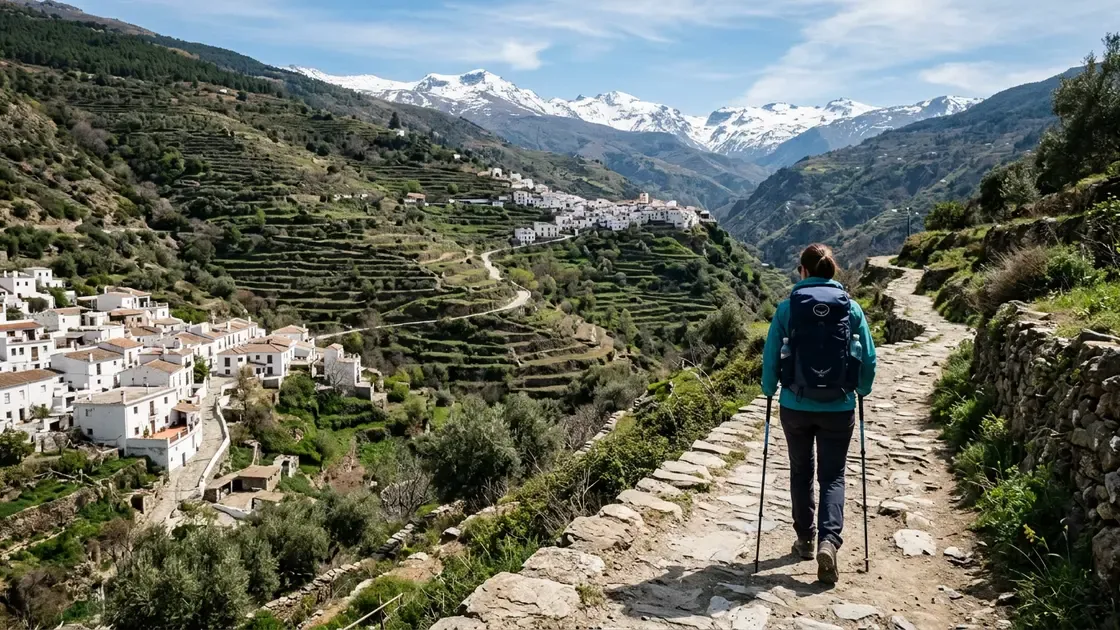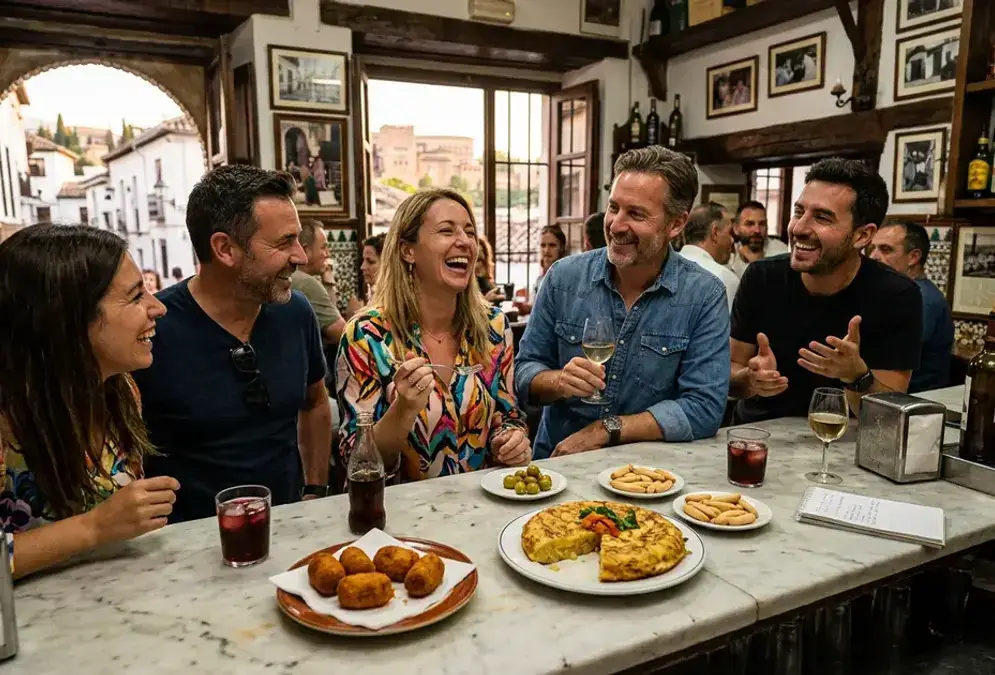
Granada operates on a food system that exists almost nowhere else in Spain: order a drink, receive a free tapa. Not bread. Not olives. A proper plate of food — jamón, salmorejo, a small montadito, sometimes a full portion of something warm. This custom dates to a contested history involving medieval health orders and cold drinks covering the glass from flies, but the practical reality is that in the right bars, you can eat a full evening's food on the cost of drinks alone.
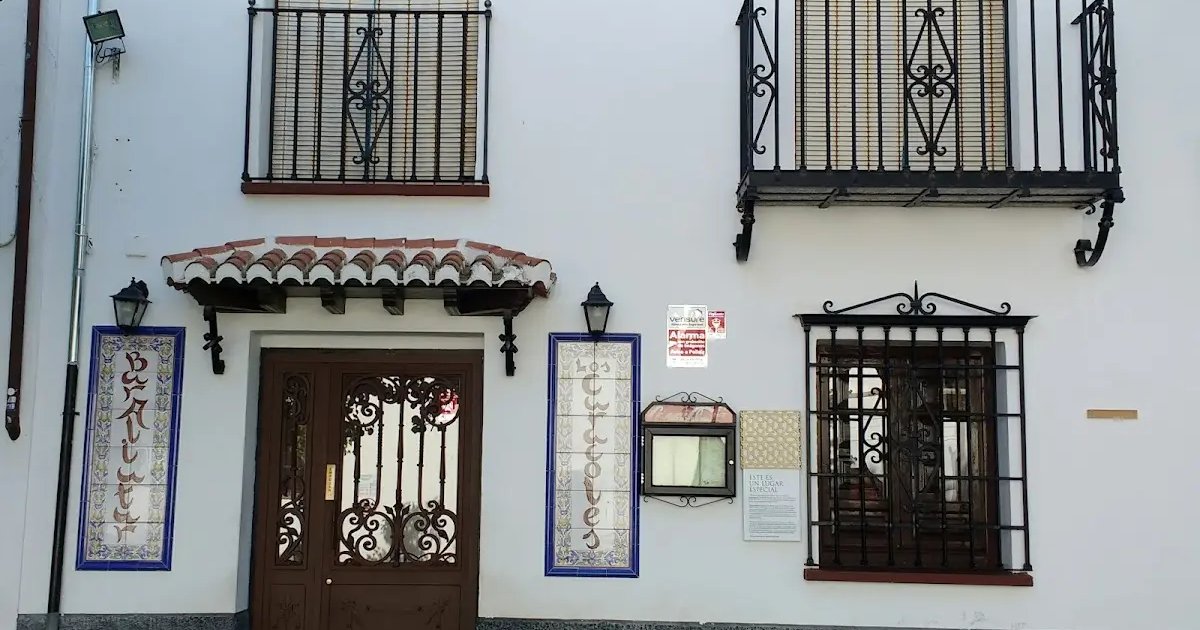
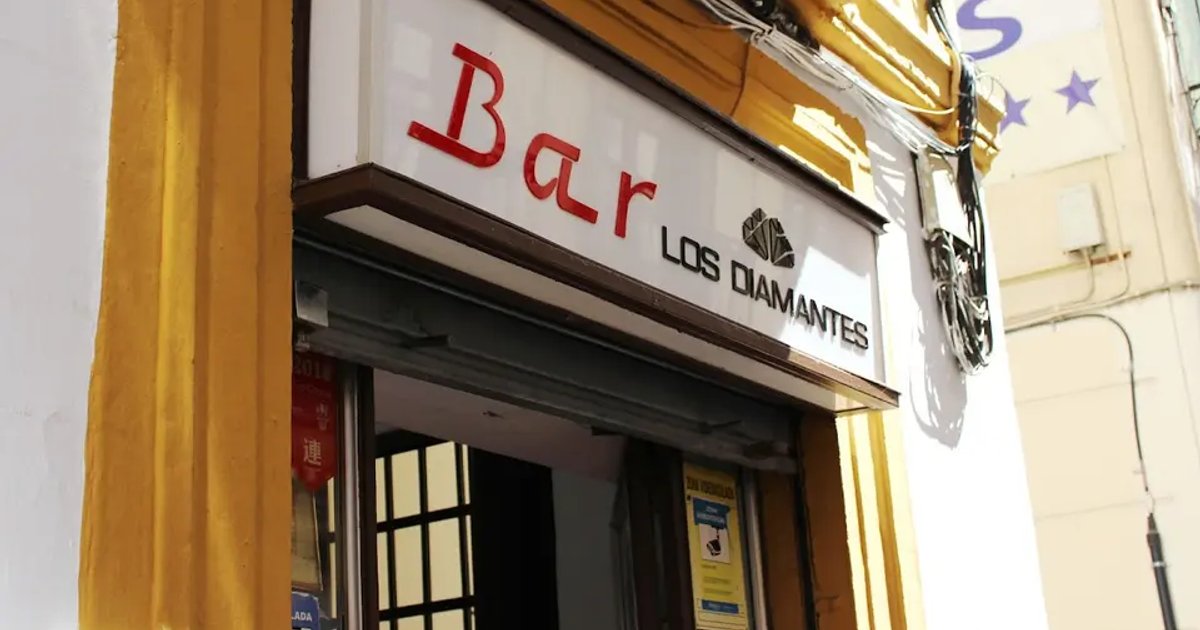
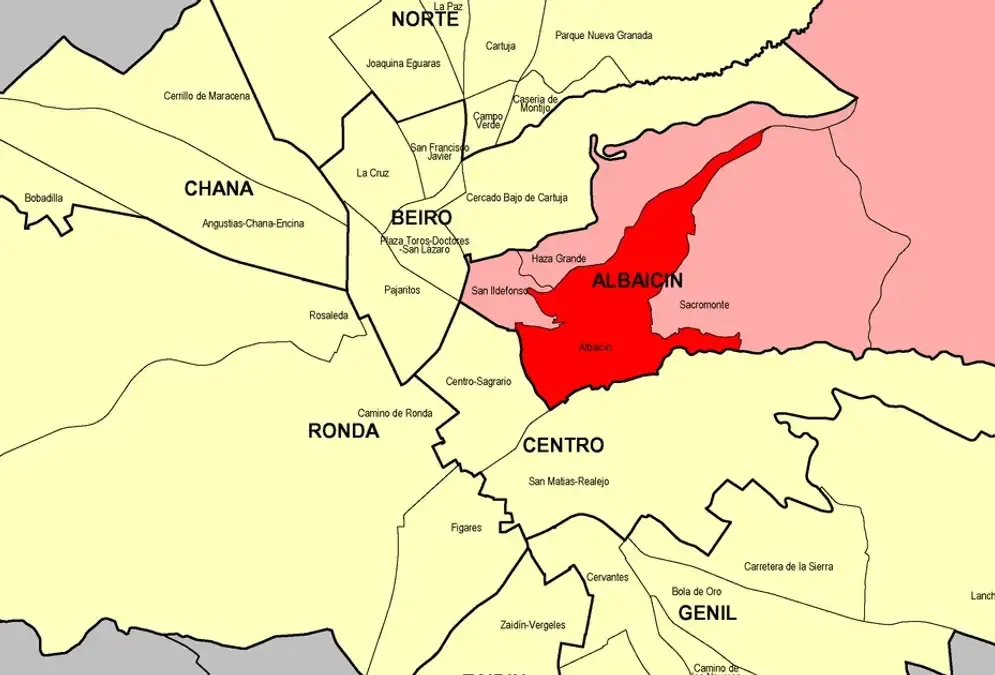
A guided tapas tour exists specifically because most visitors never find those bars. The places where this works well are not on Calle Navas, the pedestrian street that every tourist walks and every guidebook lists. They are on quieter streets in the Albaicín, in the university quarter, and in neighbourhood bars that don't need English menus because they don't need tourists.
What the tour covers
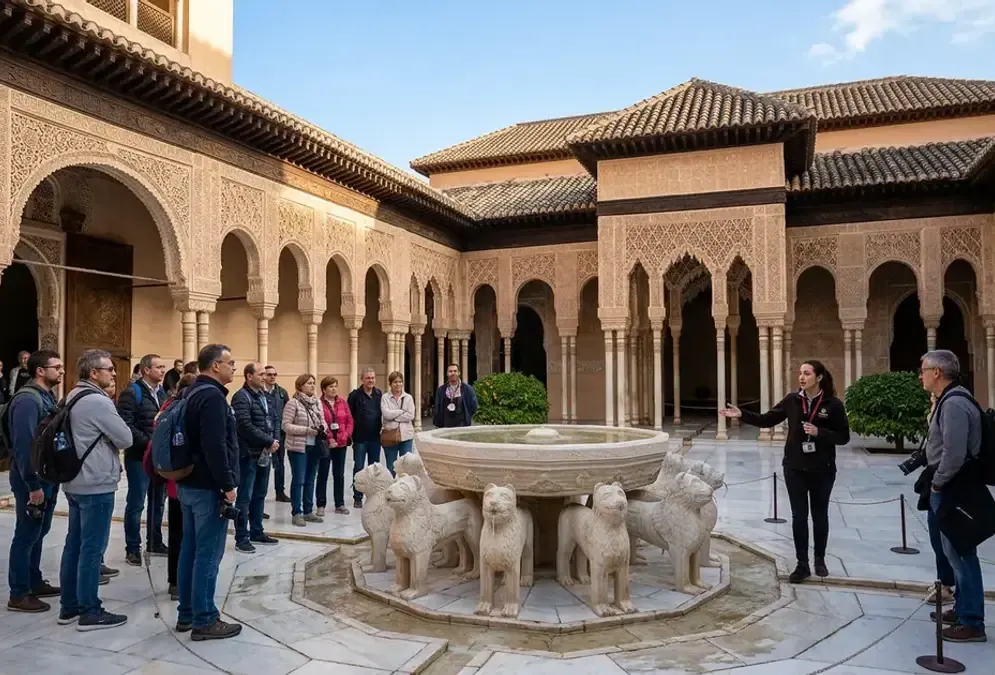
Most guided tapas tours in Granada visit three bars over 2.5 to 3 hours, covering roughly 2-3km on foot through city streets. At each stop, you drink and eat. The guide explains what you're eating, where it comes from, and how Granada's food culture connects to its Moorish history — ajoblanco, the cold almond and garlic soup, is a direct legacy of Nasrid kitchen technique. Salmorejo looks like gazpacho but is thicker, richer, and topped with cured jamón and hard-boiled egg. Boquerones en vinagre arrive white and sharp and nothing like the anchovy on a pizza.
Over a 3-hour tour the food adds up to 10-12 tapas samples and 4-5 local drinks per person. That's a full meal if you pace it properly, which the guide helps you do by managing the timing between bars.
The drinks matter as much as the food. Granada sits on the edge of the Contraviesa wine zone — a small, high-altitude area south of the city producing wines that rarely leave the province. At the right bars, the house wine is a thin-skinned local white or a dark mountain red. Order vino de la tierra rather than asking for a brand name. The guide will steer you there if you ask.
Choosing a tour
Granada Tapas Tours, founded in 2006 by a Scotland-born Granada resident named Gayle who has lived in the city for over 25 years, holds the top TripAdvisor food and drink ranking in Granada. The group size maximum is 8 people, which keeps the experience manageable inside a small bar. Their Hidden Gems tour (€65) visits three bars with six tapas and four drinks; the Classic Lunch Route (€60) focuses on the midday eating culture; private tours run €80 per person.
Spain Food Sherpas runs a 3.5-hour walking food tour at a comparable price with a focus on local ham, wines, and traditional dishes. Living Tours offers 3-hour tours with groups limited to small numbers and 10-12 samples included.
All three operators book through GetYourGuide, Viator, and Civitatis, but Granada Tapas Tours also takes direct bookings through their website — useful if you want to discuss dietary restrictions in advance.
The free tapas culture in practice
This is worth understanding before you arrive in Granada. The custom of complimentary tapas with drinks is not universal across the city. Some bars on tourist streets have dropped it entirely. Some give a small plate of crisps and call it a tapa. The good bars — the ones where locals actually drink — still put out proper food. The tour guide knows which bars do this and at what standard. Without a guide, you'll find some of them by trial and error, but you'll also waste time in places that charge €4 for a plate of olives.
The practical value of a tour is not just the food. It's the language context (guides teach you how to order and what the dishes are called), the neighbourhood navigation, and the social format. Granada tapas culture is conversational. You sit or stand at the bar, you talk to your companions, the barman slides plates along without being asked. A guide who knows the staff makes this happen faster and more naturally than walking in cold.
Logistics
Tours meet at Plaza Nueva or a nearby central point, confirmed by the operator when you book. The walking distance is gentle — mostly flat or slight inclines through the Centro and adjacent streets. Comfortable shoes are required; nothing more. The pace is slow.
Book at least 24 hours ahead. The 8-person group maximum means tours fill up quickly in high season (April–May, September–October). If you have dietary restrictions — vegetarian, gluten intolerance — flag them when booking. Most operators can accommodate with advance notice, though vegan and halal options are limited.
The optimal timing is the lunch slot (12-2pm) or early evening (6-8pm), both of which align with when local bars are at their most active. A midday tour is particularly good in summer because you eat in air-conditioned bars rather than standing on a hot street.