Andalusian cooking has a longer history than almost any other regional cuisine in Europe, and in Granada that history is unusually specific. The dishes being taught in these cooking classes are not generic Spanish food. Many of them trace directly to the Nasrid court kitchen: ajoblanco (a cold almond soup that predates the tomato in Spanish cooking by centuries), recipes for lamb with honey and cinnamon that appear in Arabic manuscripts from 12th-century Al-Andalus, and the slow-cooked meat stews that became the backbone of modern Andalusian home cooking after the Christian conquest.
A cooking class in Granada is, among other things, a history lesson via food.
Spain Food Sherpas: the cave kitchen in Sacromonte
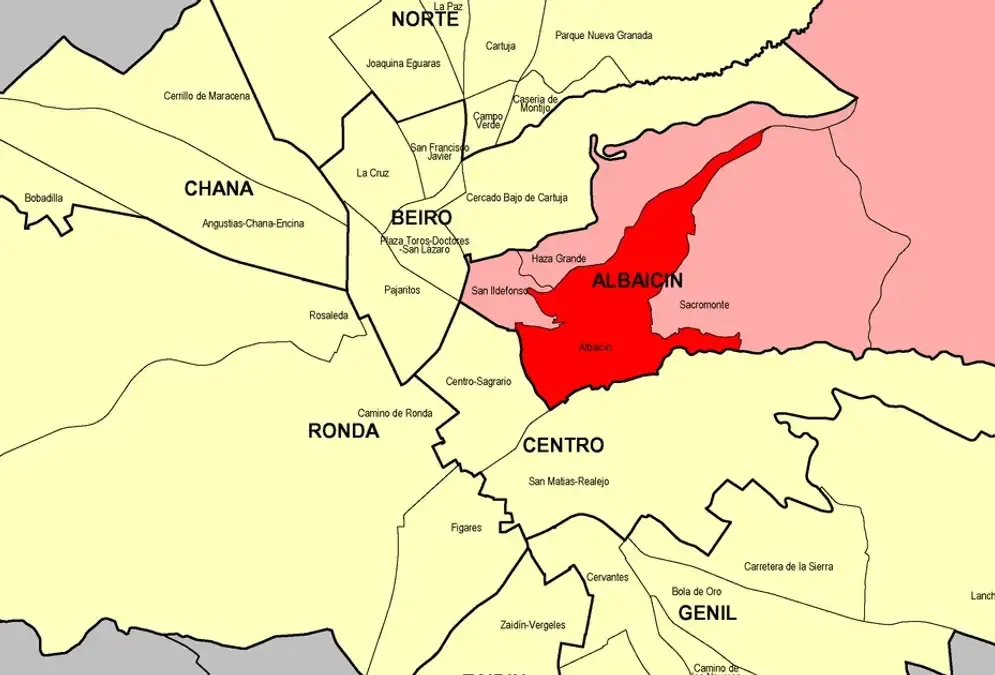
The most distinctive setting for a cooking class in Granada is Spain Food Sherpas in Sacromonte, where the kitchen is built into one of the neighbourhood's troglodyte caves at Camino del Sacromonte, 39. The natural insulation keeps the space cool in summer and warm in winter, which matters when you're spending three hours cooking.
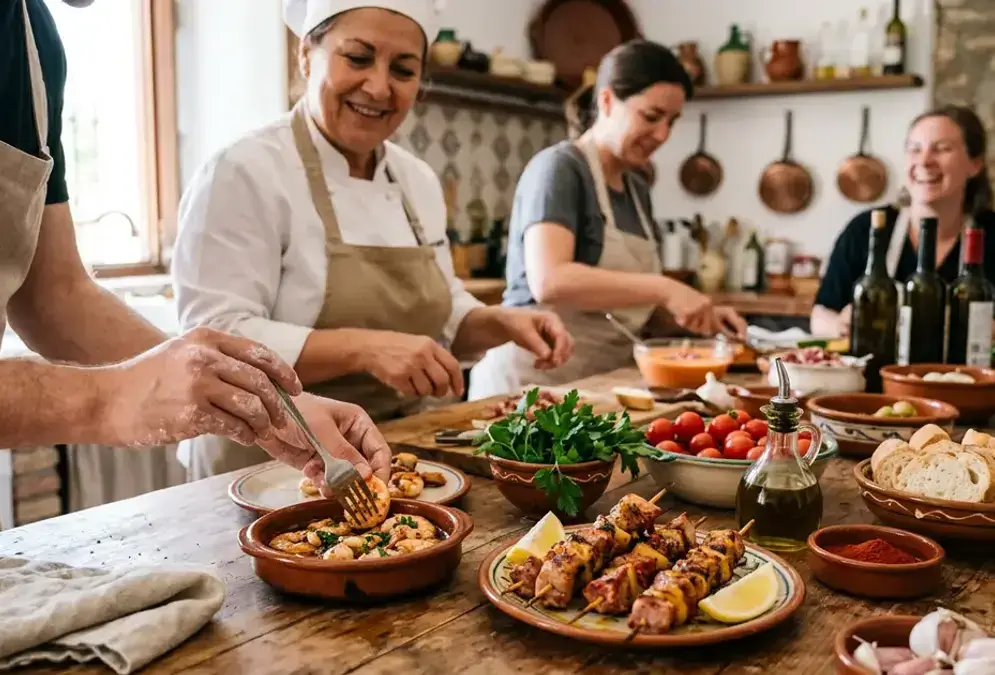
Classes run Monday through Saturday at 11am. The minimum group size is four; the format is hands-on from the start. A typical session covers salmorejo (the thick Andalusian tomato soup — nothing like gazpacho despite the apparent similarity), Spanish tortilla, paella, and crema catalana. You cook, you eat what you made, you drink local wine alongside. The class ends with a Granada Dining Guide and a 10% discount on a return booking.
Prices run €71 per adult, €59 for teenagers (13-17), €45 for children under 12. Cancellation on public tours is free up to 24 hours before; private activities require 10 days' notice.
Dietary accommodations are possible with advance notice: vegetarian substitutions, dairy-free and gluten-free options. The operator does not recommend the class for people with celiac disease due to cross-contamination risk in the shared kitchen.
CookEle: professional kitchen, 5-star reviews
CookEle Granada runs classes from a modern, well-lit professional kitchen rather than a cave. The approach is more structured: students choose from menu options in advance, selecting three appetisers, three mains, and three dessert choices to build their session. Dishes include ajoblanco, paella del mar, sangria, and crema catalana, among others.
The TripAdvisor rating is 5.0 stars across 185 reviews at time of writing — the highest-rated cooking class in the city. The instructors are professional cooks who teach in both English and Spanish. For visitors who want a professional-kitchen experience with maximum educational rigour, this is the stronger choice.
What the Moorish food connection actually means
The phrase "Moorish influence on Andalusian food" appears in every Granada brochure without much explanation. The cooking class fills in what that means in practice.
Ajoblanco is a cold soup made from almonds, garlic, olive oil, vinegar, and water — sometimes served with grapes. The recipe appears in Andalusian Arabic manuscripts from the 12th century. The tomato, which defines modern Spanish cooking, did not arrive in Europe until after Columbus in 1492, which means every dish in the Nasrid kitchen was built without it.
Rabo de toro (oxtail stew) derives from a tradition of slow-cooked meat dishes that the Nasrids developed using the spice combinations that Arabic trade routes made available: cumin, coriander, saffron, cinnamon, pepper. These flavours survive in modern Andalusian cooking in combinations that seem unusual elsewhere in Spain.
The cooking class instructor will walk through this history while you cook, which turns the practical instruction into context you can use for the rest of your time in Granada — eating in restaurants, reading menus, recognising what you're ordering.
Practical considerations
Book 2-4 weeks ahead for Spain Food Sherpas, particularly for Saturday sessions in spring and autumn when demand is highest. CookEle books through TripAdvisor and accepts groups of varying sizes.
Both operators provide all ingredients, equipment, aprons, and wine. You don't need to bring anything. Wear clothes you don't mind getting olive oil on.
The Bus C34 from the city centre stops at the entrance to Spain Food Sherpas in Sacromonte — the same line that runs to the cave museum and the flamenco venues. It's 20 minutes from Plaza Nueva.
Morning classes (11am start) are the standard format and the most comfortable in summer. Kitchen heat in an enclosed space in July can be considerable. The Sacromonte cave kitchen has natural temperature regulation; modern kitchens rely on air conditioning.
Bring a small notebook. The instructors provide recipes, but writing your own notes during the class — exact measurements, timing, the tricks that make the difference — is more useful than trying to reproduce a printed recipe from memory at home.