The walk up tells you where you are going
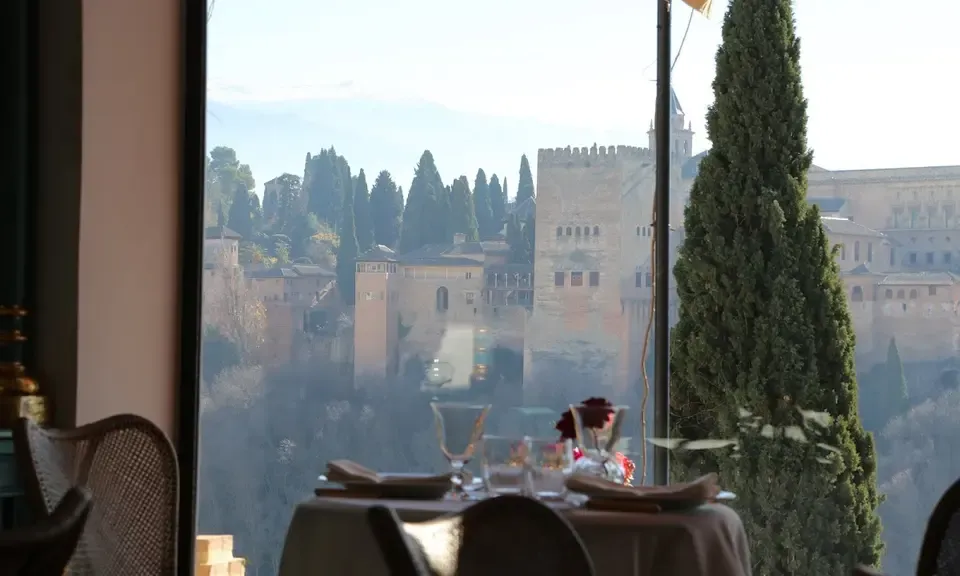
Camino del Sacromonte climbs east from the Puerta Nueva, past whitewashed cave facades, ceramic plaques, and the occasional tethered dog. By the time you reach number 83 the city has dropped away behind you. Turn around and the Alhambra is directly across the ravine, the Torres Bermejas visible to the left, the Generalife gardens rising above the walls to the right.
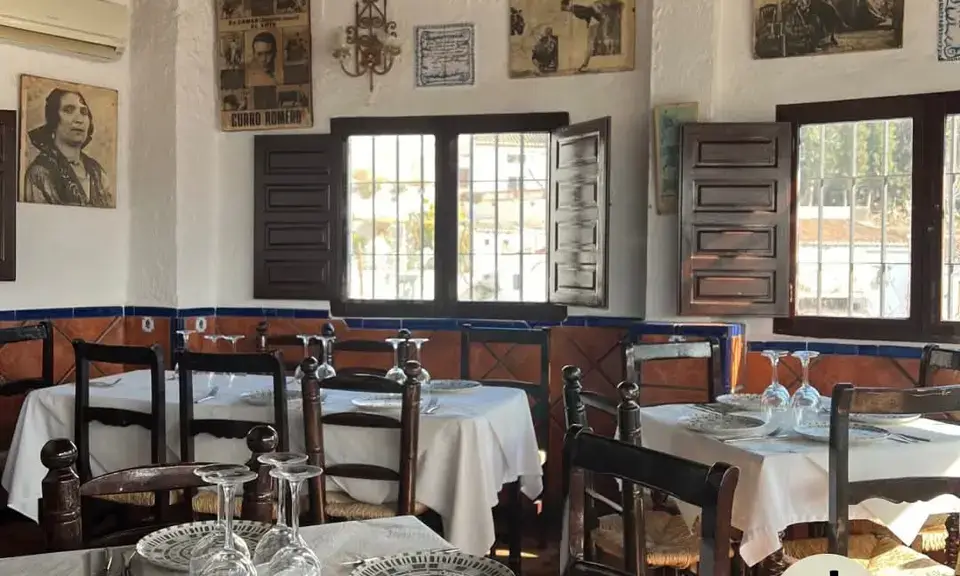
Casa Juanillo has been here long enough that the family does not bother explaining the view. They assume you already know. A chalkboard near the door lists the day's dishes. The terrace is out back, shaded by a reed awning, facing the palace.
This is the Sacromonte that the cave flamenco shows get credit for but do not actually deliver: a working neighbourhood where people cook, eat, and look out at the same view they have looked at for decades.
The food
The kitchen at Casa Juanillo follows the logic of the site: nothing complicated, nothing imported, everything grilled or slow-cooked. The choto al ajillo — young kid goat with garlic and olive oil — is the dish locals order. It takes twenty minutes and arrives at the table in a ceramic dish still bubbling. The meat pulls off the bone without resistance.
Arroz de campo (field rice) is the rice dish of inland Granada. Cooked with rabbit, chicken, and whatever seasonal vegetables the cook has on hand, it is a long way from the seafood paellas on the coast. Order it for two if you are planning to order anything else.
Grilled lamb chops, pork skewers, and blood sausage round out the main options. The tapas side is honest: fried aubergine with cane honey, marinated olives, jamón serrano. Prices are moderate — you will not pay what you would at a restaurant with this view in any other neighbourhood in Granada.
For context on eating in the area, the where to eat near Alhambra guide compares the main options on both sides of the Darro ravine.
The terrace and what to expect
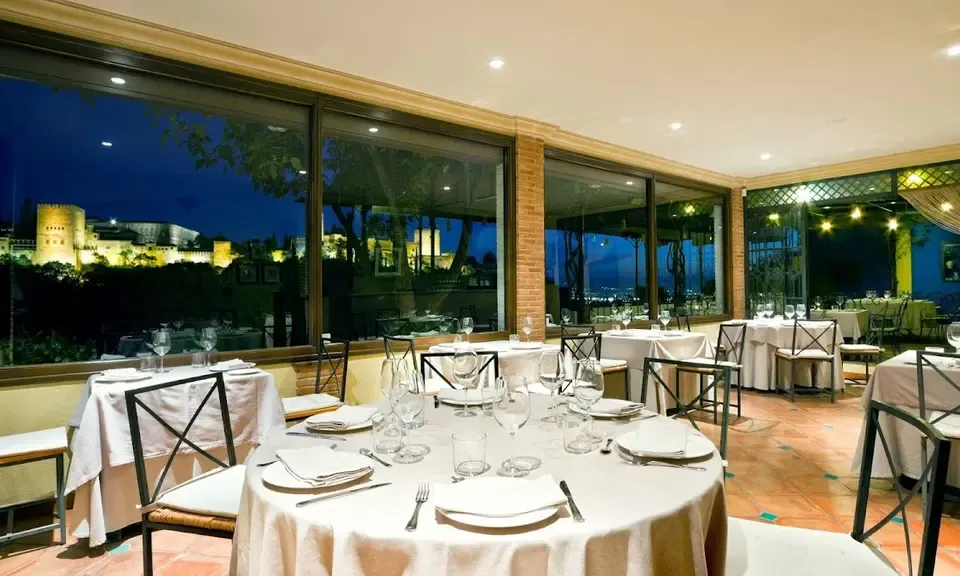
The terrace is small. Eight tables, maybe ten on a busy night when chairs get shuffled. The tables nearest the railing look directly across at the Alhambra walls. In the afternoon, the sun hits the palace towers and the stone goes from grey to gold over the course of about forty minutes. If you time lunch right, you watch this happen over your second glass of wine.
Service is family-style in the literal sense. The staff know the regulars and treat first-timers with the same matter-of-fact warmth. They will not explain the menu in English unless you ask, but they will not be impatient either. Pointing works.
Noise level is conversational. Music does not compete with conversation. The neighbourhood sounds — scooters, children, the distant beat from a cueva below — carry on regardless.
Getting there and when to go
Casa Juanillo is a twenty-minute walk from Plaza Nueva. Follow the Carrera del Darro upstream, cross at the Puente del Aljibillo, and take the road that climbs toward the Abadía del Sacromonte. The restaurant is on the left before you reach the monastery complex.
There is no bus to the door. Taxis can drop at the foot of Camino del Sacromonte. Walking up is the point — you pass through the cave quarter at the pace it deserves, and by the time you arrive you have earned the terrace seat.
For a deeper sense of the neighbourhood before your visit, read the Sacromonte Granada guide, which covers the cave history, the Abadía, and the best time to walk up.
Sunday lunch is the busiest session of the week. On a Sunday in April or May the terrace fills by 14:00 and stays full until late afternoon. Come at 13:00 to get a railing seat, or arrive after 16:00 when the main sitting clears. Midweek dinner is the easiest option for the same seats with half the crowd.