A room that earns its altitude
The CajaGranada Memoria de Andalucía building is a concrete and glass cube on the western edge of the city, near the science park. Restaurante Arriaga sits on its rooftop at 60 metres: high enough that Sierra Nevada fills the east, the old city spills below it, and on clear days you can see south toward the coast. Few restaurants in Andalusia have a comparable position, and this one actually earns it. The food is reason enough to come regardless of the view.
Chef Álvaro Arriaga trained in San Sebastián. The discipline of the Basque kitchen is present in his technique: precise temperatures, clean reductions, nothing sloppy. But the ingredients and the flavour logic are from Granada province, and Arriaga works hard to keep it that way. The menus read as contemporary Andalusian, not as a northern cooking style transplanted south.
Two menus, two intentions
Arriaga offers two tasting menus: Tradición (6 courses, €80) and Paisaje (9 courses, €100). Wine pairing is available for both.
Tradición runs shorter and tighter. It takes classic Granadan preparations and focuses them: pork from the Alpujarras villages, vegetables from the Vega, local trout. The portions are precise and the sequence does not outstay its welcome.
Paisaje is the full argument. Nine courses move through the province's landscape: coastal fish from Motril, mountain cured meats, vega produce at different stages of preparation, Granada wines threaded through the pairing. The €100 price is competitive for this level of cooking in Spain. A comparable Michelin-listed tasting menu in Seville or Málaga will cost €30–40 more.
Both menus change seasonally. The kitchen does not keep a permanent card; the dishes shift as the market shifts.
What makes the cooking distinct
Arriaga's kitchen is not doing the obvious gastronomic-Granada play of building everything around the Alhambra-view experience and coasting. The sourcing is specific: fish arrives from the Mediterranean shore at Motril, 65 kilometres away. The lamb is Alpujarran. The olive oil is from the province's eastern groves, where altitude and dryness produce a different character than the fat Córdoban oils that dominate most Andalusian kitchens.
Technically, the kitchen works with fermentation and slow preparation that shows in the depth of the sauces rather than in molecular theatre. No gel spheres or smoked domes. The ambition is in flavour concentration, not spectacle.
For food lovers visiting Granada, this is the clearest case for a gastronomic dinner rather than a tapas evening. One meal at Arriaga gives a more concentrated reading of the province's ingredients than a week of bar-hopping.
The room
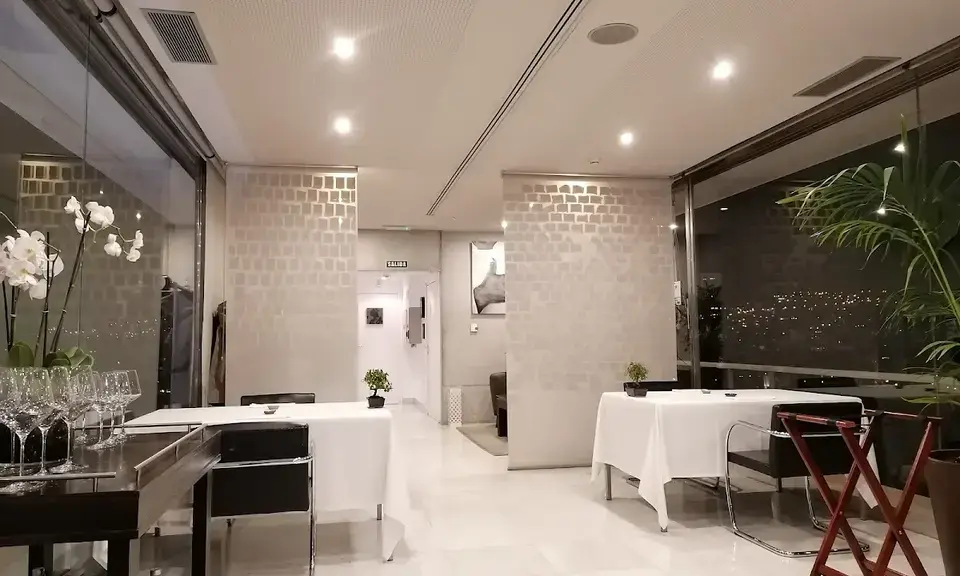
The dining room is formal without being uncomfortable: white tablecloths, wide windows, a ceiling high enough that the room breathes. The capacity is small enough that service stays attentive without becoming intrusive. During summer, a terrace opens on the rooftop itself; dinner in July and August, with the old city illuminated below and the Sierra still holding snow at the peaks, is one of the more memorable experiences this city offers.
Service is professional and bilingual. Staff can explain each course, describe the sourcing, and discuss wine without condescension. They are used to guests who know what they are doing and to guests who are eating at this level for the first time.
Getting there and booking
The CajaGranada building is on Avenida de la Ciencia, near the Palacio de los Deportes. From the city centre it is a fifteen-minute taxi or a short bus ride; there is no scenic walk from the Albaicín. This is a destination dinner, not a neighbourhood stumble.
Reservations are required. Weekend evenings fill two to three weeks ahead in summer. Book through their website or by phone. When booking, ask for a window seat facing the mountains: not all positions in the room face the view equally.
Among the best restaurants in Granada, Arriaga fills a specific slot: the gastronomic dinner with a genuine sense of place, at a price that still makes sense.