The case for 27 rooms
The Seda Club Hotel sits in Granada's historic centre, a short walk from Granada Cathedral and the Royal Chapel. Twenty-one rooms and six suites: the inventory is deliberate. At this scale, the staff-to-guest ratio stays high enough to do things properly — a welcome letter that reflects your stay, a dinner reservation made before you land, a spa booking that doesn't conflict with checkout. Membership in Small Luxury Hotels of the World is the signal the hotel sends to guests who know what it means: independent, owner-operated, accountable to a standard that the big chains can't consistently reach.
The building sits in the centro district, where Granada's layered history is most concentrated. The Cathedral's Renaissance facade, the Alcaicería silk market, the Madraza — all within a few minutes on foot. The neighbourhood has its share of tourist-facing restaurants too, but the hotel's dining room makes that irrelevant.
The spa and what it's actually for
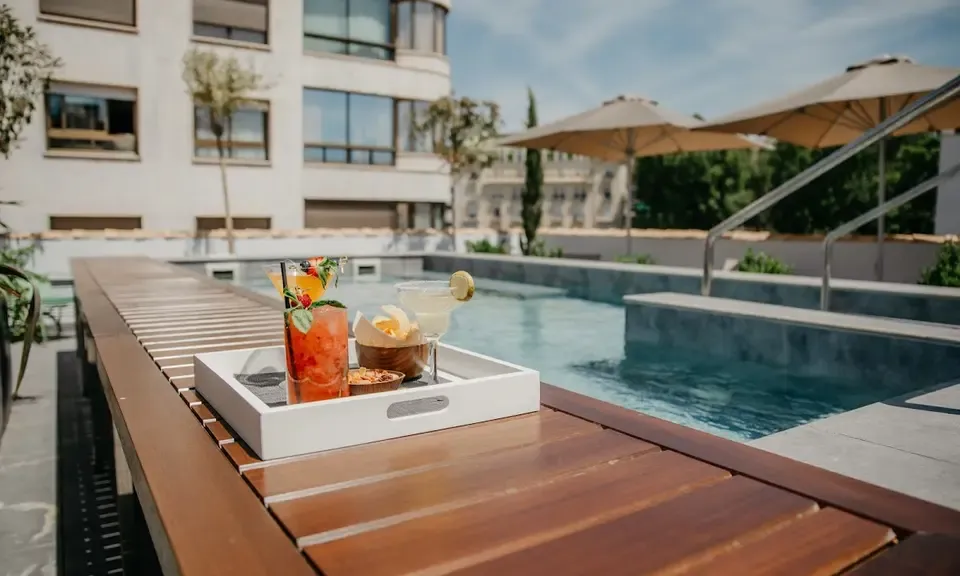
A hotel spa at this price point is either a genuine facility or a small pool with a steam room dressed up as an experience. The Seda Club's spa has a full treatment menu and trained therapists: space to decompress after a morning at the Alhambra. Granada's compact historic centre means you are on your feet most of the day. The spa is where you recover from it.
Granada has more Arabic bath heritage than most Spanish cities. The Hammam Al Andalus on Calle Santa Ana has been running public hammam sessions ten minutes' walk from the hotel since 1998. The Seda Club's private spa gives guests the quieter, unhurried version of the same instinct: warm water, dim light, no shared circuit with strangers.
Fine dining without the pilgrimage
Granada has its share of destination restaurants that require planning. La Fabula at the Hotel Villa Oniria is one; Damasqueros in the Realejo is another. The Seda Club's kitchen means you don't always need to plan ahead. As a food journalist, I'd say the test of a hotel restaurant is simple: would you go if you weren't staying there? A strong kitchen answers yes.
The menu works with Andalusian produce: jamón de Trevélez from the Sierra Nevada villages, vegetables from the Vega de Granada, seafood from the Costa Tropical two hours south. The cooking is contemporary without abandoning what makes this geography worth eating in. The wine list has depth in southern Spanish denominations — Condado de Huelva, Montilla-Moriles, Jerez for the aperitivo — alongside Rioja and Ribera for guests who want something more familiar.
The rooftop
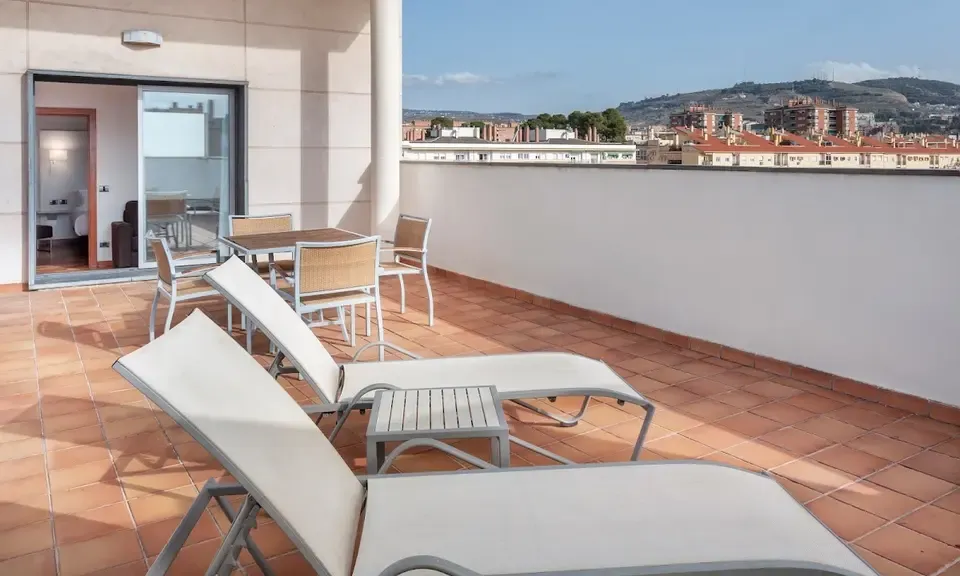
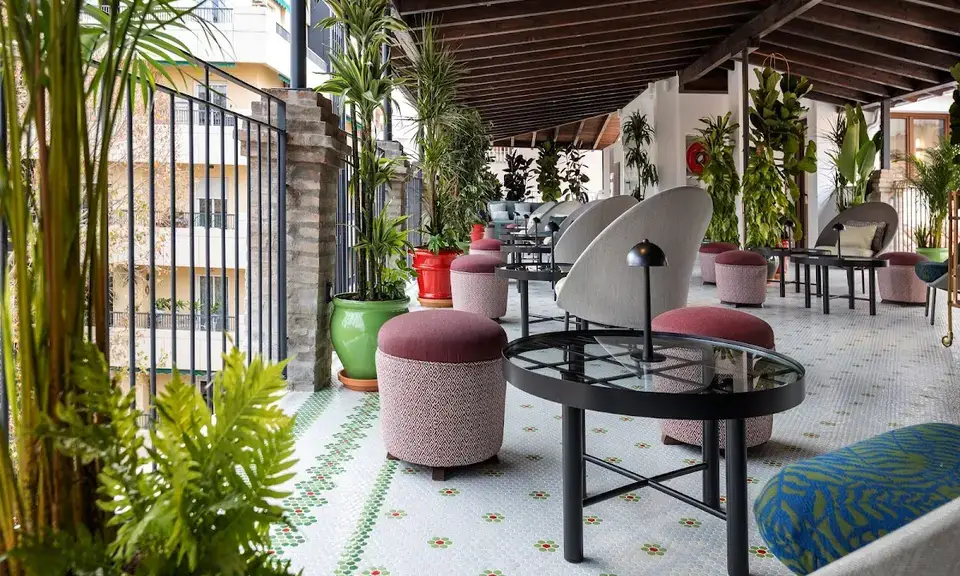
A rooftop in Granada's historic centre is not a novelty. Room Mate Leo has one; several newer hotels have opened terrace bars. The difference at the Seda Club is the level of finish and the number of people up there at any one time. Twenty-seven guests plus a handful of non-residents is a different evening from a terrace bar operating at capacity.
The views are towards the Cathedral quarter and, depending on the room position, out towards the Sierra Nevada to the southeast. In the evening, the bell towers of the Cathedral and the Monasterio de San Jerónimo catch the last light from the west. The snow line on the Sierra Nevada is visible above the roofline from October through May on clear days — one of those Granada details that people don't expect until they're looking at it.