Seven years resident in Granada. Specialist in Nasrid architecture, Al-Andalus history, and Andalusian walking routes.
Published
Why visit the Abadía
The Real Abadía del Sacromonte sits at the top of the hill that rises above Granada's cave district, at a point where the city effectively runs out of road and becomes a path through scrubland. Founded in 1601, it is a Baroque institution built on a foundation of forgery, cultural politics, and genuine religious enthusiasm — and understanding that foundation makes it considerably more interesting than a standard monastery visit.
What it offers:
Underground catacombs where the relics of early Christian martyrs were discovered — or rather, planted — at the end of the 16th century
A museum collection that includes Flemish paintings, Granada silver, liturgical vestments, and a Goya painting that is the only work by the artist in the city
A Baroque church built into and around the cave system, unusual in its spatial logic
The Escuela de Arte Flamenco, which operates within the complex and connects the abbey to the performing arts heritage of Sacromonte
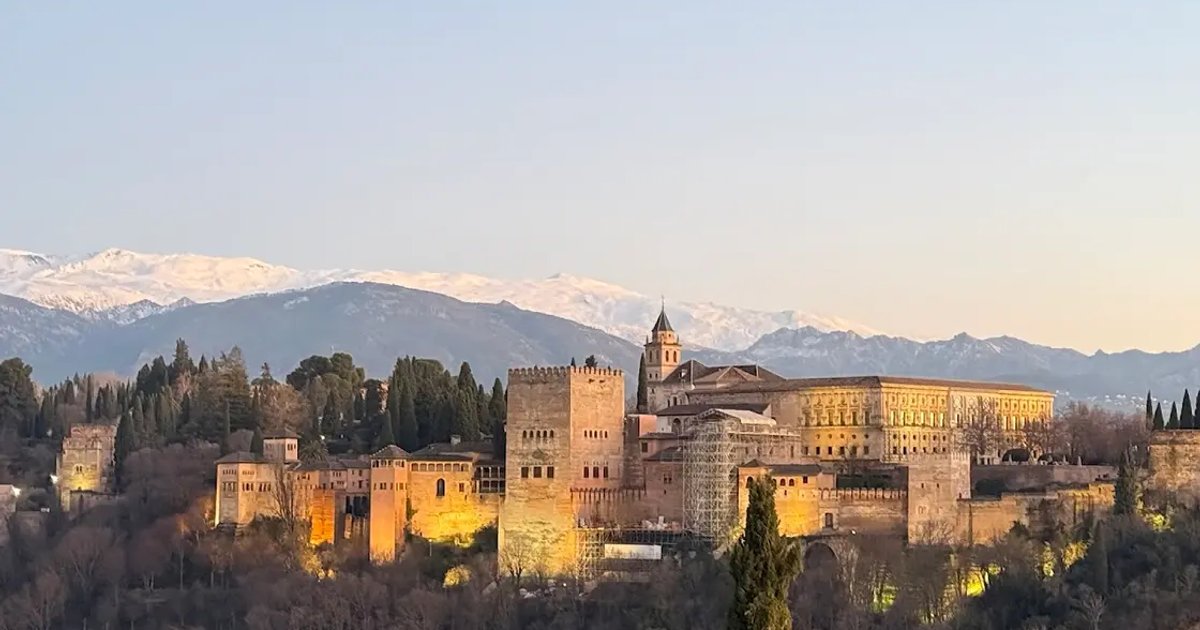
Views across Granada from the abbey terrace that are not the same as the famous Mirador de San Nicolás view — this one looks down the valley toward the Alhambra from a different angle
The visit requires a guided tour (the only access to catacombs, museum, and church interior), takes around 90 minutes, and costs €5. The hill walk up from Plaza Nueva takes approximately 25 minutes on foot.
The lead books and their aftermath
Between 1588 and 1599, a series of discoveries were made on the hill of Sacromonte that appeared to confirm Granada as a city of foundational Christian importance. First, the Torre Turpiana (a demolished mosque minaret) yielded a casket containing a painted cloth of the Virgin Mary, a feather from the archangel Gabriel, a bone, and a parchment written in Latin, Arabic, and Castilian. Then the caves in Sacromonte yielded leaden discs — the Plomos — inscribed with text in Arabic and a mysterious proto-Arabic script, describing the martyrdom of the apostle Saint Cecilio and his companions in Roman Granada.
The Archbishop of Granada, Pedro de Castro, embraced them immediately. Sacromonte was designated a sacred site. The Real Abadía was founded in 1601 to protect and venerate the relics. Pilgrims came. A collegiate church was built over the cave where Saint Cecilio had supposedly been martyred.
Rome was unconvinced. After decades of theological debate, Pope Innocent XI declared the lead books apocryphal in 1682. The physical discs were confiscated and taken to the Vatican, where they remained until 2000 (they are now in the Capilla Real in Granada, still not on public display).
Modern scholarship has identified the Plomos as almost certainly the work of Morisco intellectuals — the Christianised Muslim population of Granada — who wanted to create a theological bridge between Islam and Christianity in the post-Reconquista city. The texts mixed Islamic ideas about Jesus with Christian doctrine, described Arabic as a holy language used by the apostles, and positioned Granada as a site of shared Abrahamic heritage. It was a sophisticated attempt to find a place for the Moorish community in a city that was rapidly expelling them. The expulsion of the Moriscos came in 1609, ten years after the last lead book was found.
The lead books today
The original Plomos are held at the Capilla Real but are not on public display. The abbey museum holds replicas and extensive documentation. The story is told in full on the guided tour.
The underground catacombs
The catacombs are the most atmospheric part of the Abadía visit. The guided tour descends into the cave system beneath the church, passing through a series of chambers where the relics were supposedly found. The rock is bare limestone — warm-coloured and uneven — and the chambers are lit by low artificial light that emphasises the geological reality of the space.
The key chamber is the Cueva del Santo Sepulcro, the supposed site of Saint Cecilio's martyrdom. A replica of the lead books is displayed here, along with the kinds of objects that would have been present during the 16th-century discoveries. Whether you accept the martyrdom story or the forgery interpretation, the space itself has an undeniable weight.
The catacombs are entirely underground and accessed only through the guided tour. Photography is permitted. The temperature is noticeably cooler than the exterior — a genuine relief in summer.
The museum collection
The abbey museum occupies rooms around the cloister and includes material accumulated over four centuries of institutional life. Highlights include:
Flemish paintings: several 16th and 17th-century works, mostly religious subjects, acquired during the period of Spanish Habsburg control of the Low Countries
Granada silver: a collection of liturgical silverwork from the Granada workshops that dominated Iberian sacred metalwork in the 17th century
A Goya painting: specifically a portrait of the Canon Felipe de Guevara, the only Goya in any Granada institution — the artist himself had no direct connection to the city, making its presence here an accident of patronage rather than a geographical link
The ethnographic collection: tools, objects, and documentation relating to Sacromonte's Romani community and their way of life in the cave houses — an element that distinguishes this from a standard ecclesiastical museum
Replicas of the lead books: displayed in context, with explanatory material about their discovery, reception, and eventual condemnation
Full visiting details — hours, admission prices, transport options, and insider tips — are on the Abadía del Sacromonte museum page.
Flamenco and the abbey
The connection between the Abadía del Sacromonte and the flamenco tradition of the neighbourhood below it is not immediately obvious from the outside. A Baroque Catholic institution and the cave-house culture of the Romani community seem at first glance to occupy separate worlds.
The link is historical. When the abbey designated Sacromonte as a sacred site in the early 17th century, it effectively sanctioned the neighbourhood's existence. The Romani population who settled in the cave houses — already present before the abbey's foundation — gained a kind of institutional legitimacy through proximity to the sacred. The neighbourhood developed its distinctive character in part because the abbey's status protected it from the clearances that eliminated other marginal communities from the city.
The Escuela de Arte Flamenco operates today within the abbey complex, continuing this institutional relationship. The school trains performers in the zambra style — the distinctively Granada form of flamenco that developed specifically in the Sacromonte caves. For visitors interested in the deeper history of the flamenco tradition rather than just seeing a show, the abbey provides context that the cave venues themselves don't offer.
The Granada flamenco guide covers the Sacromonte performance scene, the zambra style, and how to book shows in the cave venues below the abbey.
On foot: 25–30 min uphill from Plaza Nueva via Cuesta del Chapiz and Camino del Sacromonte
Bus: C2 minibus from Plaza Nueva to the Sacromonte caves area (not all the way to the abbey — a further 10-min walk uphill)
Taxi: €6–8 from the centre; recommended in summer or with limited mobility
What to combine
Morning: abbey guided tour. Afternoon: walk downhill through the cave houses to the Sacromonte Caves Museum. Evening: flamenco show in one of the cave venues on Camino del Sacromonte. This covers the full Sacromonte experience in a single day without backtracking.
Address
Camino del Sacromonte, s/n, 18010 Granada. The road continues past the cave museum — the abbey is at the top, clearly visible from below. No street numbers on this road; follow the camino to the end.
Reporter notebook
Insider tips
Practical observations gathered the way a local journalist would keep them: short, specific, and more useful than brochure copy.
Booking tip
Confirm the tour schedule before the walk up
The Abadía sits at the top of a steep hill — around 25 minutes of uphill walking from Plaza Nueva. The guided tour is mandatory and runs at set times. If you arrive between tours, you wait outside. Check the day's schedule by phone or on the abbey's website before starting the climb. A taxi to the top costs around €6–8 from the centre.
Local custom
Combine with the Sacromonte Caves Museum below
Start at the Abadía for the morning tour, then walk downhill through the cave houses to the Sacromonte Caves Museum. The downhill direction makes the combination much more manageable. This gives you both the religious/art history angle (abbey) and the social/ethnographic angle (caves museum) in a single Sacromonte morning.
Best time
Winter visits are quieter and free of heat
Sacromonte in summer means a steep uphill walk in 35°C heat. The same route in October or March is a very different experience. Winter visiting hours are shorter (10:00–14:00 and 15:00–18:15) but the hill is significantly more pleasant and tours are smaller. Mornings on weekdays are the quietest option year-round.
Albaicín and Sacromonte walking tours
Tours are selected for quality, not commission. We earn a small fee if you book — at no extra cost to you.
Guided walks through Sacromonte often include the abbey area and provide context for the neighbourhood's history that's hard to piece together independently.
Yes, if you have any interest in the intersection of religion, cultural politics, and forged history. The catacombs are genuinely atmospheric, the museum has unexpected depth (including Granada's only Goya painting), and the backstory of the lead books — presented as early Christian texts, accepted by the local church, and eventually condemned as forgeries by Rome — is one of the stranger episodes in post-Reconquista Spanish history. The visit takes about 90 minutes and the cost is low.
What are the Plomos del Sacromonte?
The Plomos (lead books) were a collection of leaden discs discovered in the Sacromonte caves between 1595 and 1599, inscribed with text in Arabic and a proto-Arabic script. They appeared to describe the martyrdom of Saint Cecilio and his companions — early Christian converts in Roman-era Granada — and included the image of the Virgin Mary. The local church, eager for a founding miracle, accepted them enthusiastically. Rome was more sceptical: after decades of controversy, Pope Innocent XI declared them forgeries in 1682. Modern scholarship considers them a sophisticated attempt by Morisco intellectuals to create a syncretic Christian-Islamic identity for the city's Moorish population after the Reconquista.
Do you need to book the Abadía visit in advance?
Guided tours are the only access to the main sites (catacombs, museum, church interior). Tours run at set times throughout the day — typically 10:30, 12:00, 13:30, 16:00, and 17:30, though schedules change seasonally. In peak season (April–September), tours can fill on weekend mornings. The abbey's website and the Granada tourism office can confirm current times. Walking up the hill to find the abbey closed is a common frustration for visitors who didn't check.
How does the Abadía relate to Sacromonte flamenco?
The connection is indirect but real. The abbey legitimised Sacromonte as a sacred site for the Romani community who settled in the cave houses below it. The Catholic church's endorsement of Sacromonte — even if based on forged documents — gave the neighbourhood a kind of sanctioned status that contributed to its survival as a distinct community. The flamenco school (Escuela de Arte Flamenco) operates within the abbey complex today, sustaining the link between the institution and the neighbourhood's performing arts heritage.
Is the Abadía the same as the Sacromonte Caves Museum?
No. The Sacromonte Caves Museum (Museo Cuevas del Sacromonte) is a separate site lower on the hill that focuses on the ethnographic history of the Romani cave-dwelling community — their tools, crafts, way of life, and the cave architecture itself. The Abadía is the Baroque abbey at the top of the hill with the catacombs, religious art collection, and church. Both are worth visiting; the caves museum is more accessible without booking.