The building's history
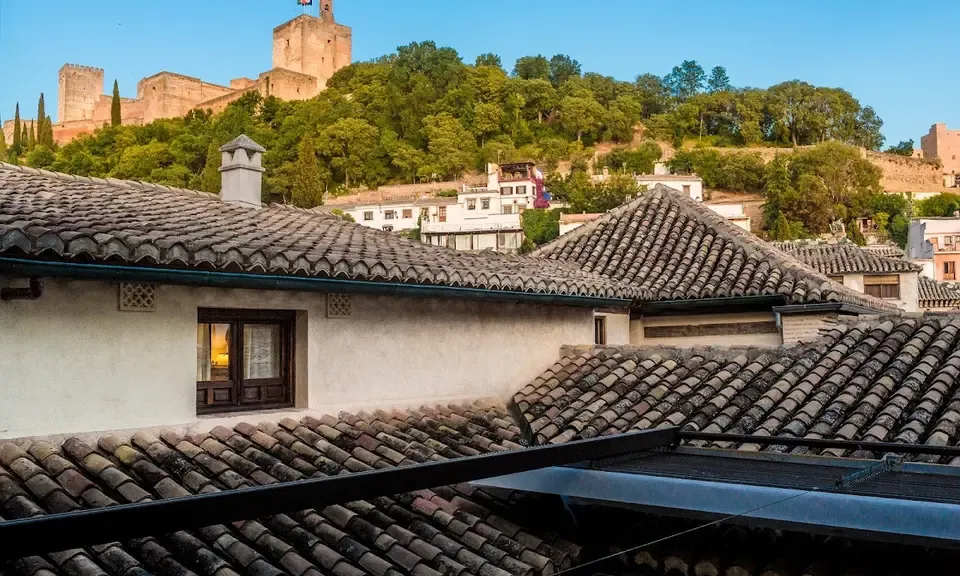
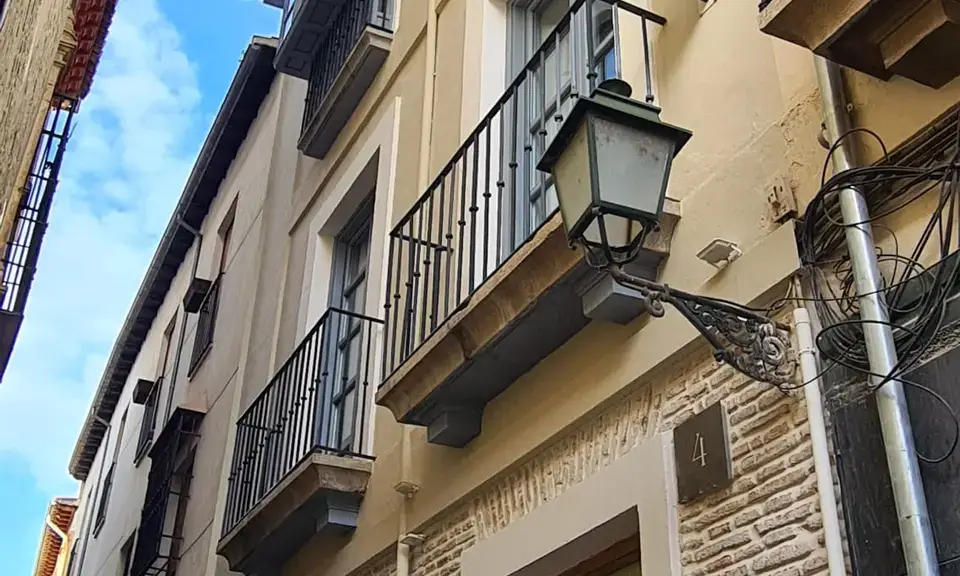
The Escudo del Carmen sits in the Realejo, the former Jewish quarter at the southern foot of the Alhambra hill. The building started as an annex to a religious complex in the 18th century, and the physical evidence of that past is still present: thick whitewashed walls, stone thresholds worn smooth by two centuries of foot traffic, and internal proportions that were designed around silence rather than efficiency. Successive owners modified it over the years, as happens with any building that survives long enough, but the restoration prioritised the structure's original fabric rather than replacing it.
Sustainable design guided the restoration at every decision point. That means materials sourced locally where possible, traditional lime-based renders instead of synthetic finishes, and thermal mass used actively to moderate summer heat in the way the building's original designers intended.
Rooms and atmosphere
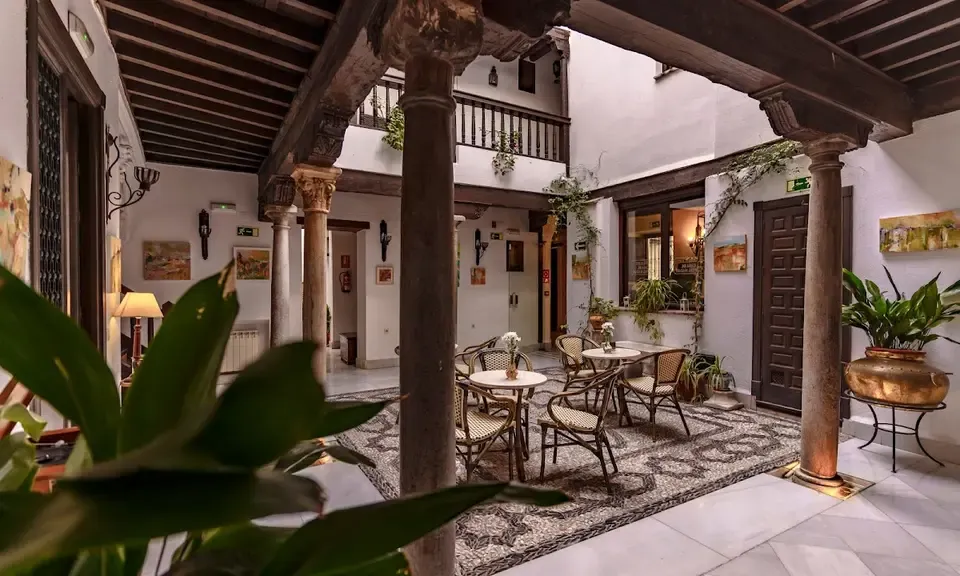
The rooms occupy the former residential wings of the annex, arranged around a central courtyard. Stone floors and exposed timber beams are original to the structure; the furnishings work around the architecture rather than against it. Ceiling heights vary by room because the building was not designed for uniformity, which means the character of individual rooms differs considerably.
The courtyard is the hotel's quiet centre. Jasmine climbs the walls from early spring. In July and August, when the city above the street level can be aggressive in its heat, the courtyard holds a different temperature, the stone radiating cool into the early evening hours.
Location and what to do from here
The Realejo is not a tourist quarter in the way the Albaicin is. Campo del Príncipe, the neighbourhood's main square, is five minutes on foot and fills up most evenings with a local crowd. The Alhambra grounds entrance via the Puerta de las Granadas is a ten-minute uphill walk from the hotel. Granada Cathedral and the Alcaiceria are fifteen minutes on flat ground heading north.
From the hotel, you have two good options for the Alhambra: walk up through the shaded Bosque de la Alhambra paths that run alongside the walls, or take the C3 microbus from nearby stops. The walk takes around 25 minutes at a moderate pace and deposits you directly at the Puerta de la Justicia entrance; the bus takes eight minutes.
For evenings, the streets around Realejo and Campo del Príncipe run on Granada's tapas system: order a drink and a small plate arrives without asking. The concentration of traditional bars in this part of the city is higher than in the more tourist-facing streets closer to Plaza Nueva.
Practical details
The hotel sits within walking distance of the central bus stops and within 20 minutes on foot of the Alhambra ticket office. Check-in hours should be confirmed directly with the hotel, as boutique properties in converted buildings typically have limited front desk coverage outside standard hours. The website at hotelescudodelcarmen.com carries current availability and rate information.
The historic structure means some rooms involve stairs; if mobility is a consideration, mention it at booking. Spring and autumn are the best seasons: temperatures stay manageable, the courtyard jasmine is in flower from March, and Alhambra ticket availability is easier than in July and August when both the demand and the heat are at their worst.